
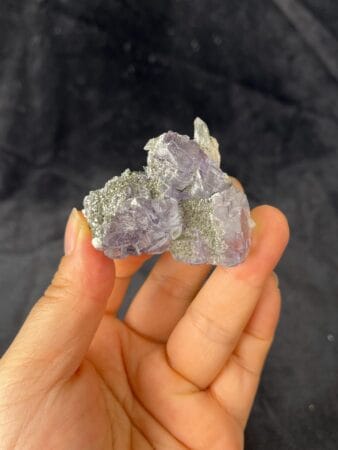
What "ethical" means in practice
Permits. Material legally exported with documentation. Diggers paid above subsistence rates, not pennies for cabinet-grade finds. Truthful locality data — not a generic 'China' when the buyer asked which mine. Treatments disclosed (heat, irradiation, acid cleaning, repair, stabilization). No purchases that fund armed conflict or illegal mining concessions. These are minimum bars, not virtue signaling.
Red flags
Prices below the obvious cost of mining + transport + dealer cut for the quality offered. 'Lost' paperwork. Refusal to discuss the dealer chain. A locality label that conflicts with the specimen's mineralogy — Tsumeb dioptase doesn't come from 'Africa,' it comes from a specific mine in Namibia. Fake matrices (specimen glued to a foreign rock to inflate cabinet appeal). Undisclosed repair (lapidary-grade reconstructive work that's invisible to the naked eye).
Questions to ask a dealer
Which specific mine and shaft? When was this piece collected? Who collected it? Has it been cleaned, treated, or repaired in any way? Do you have an export permit or invoice? Most reputable dealers welcome these questions — being asked is the sign of an informed customer. Sellers who get defensive about provenance are usually defensive for a reason.
Why provenance protects the buyer
Provenance is not paperwork for its own sake — it is the difference between an asset and a liability. A specimen with a documented mine, collection date, and dealer chain is far easier to insure, resell, donate, or pass on, because the next owner can verify what you verified. Old collection labels (the small printed cards that accompany a piece through successive owners) add genuine value, and reputable collectors keep them with the specimen rather than discarding them. The further back you can trace a piece, the more confident a buyer can be that it is natural, correctly identified, and legally held. Treat a missing or vague locality as a real cost, not a cosmetic flaw.
Treatments, fakes, and honest disclosure
Many minerals on the market have been altered, and the ethical issue is disclosure, not the treatment itself. Common interventions include heating (to deepen or change color), irradiation (to color some quartz and topaz), oiling or stabilizing, gluing crystals back onto matrix, and dyeing porous material. Some fakes are entirely manufactured — lab-grown bismuth crystals, manufactured 'aura' coatings, smoky color produced by irradiating clear quartz, or composite pieces assembled from parts of several specimens. A trustworthy seller states plainly when a piece is treated, repaired, or reconstructed, and prices it accordingly. If a deal looks too good for the quality, assume an undisclosed treatment or a wrong locality until proven otherwise.
For Chinese material specifically, learning the natural look of a locality is your best defense — a fluorite that does not match how Yaogangxian or Shangbao actually crystallize deserves a second look.
Legal export and the China context
Specimens cross borders under real laws, and 'someone smuggled it out' is never a feature. Responsible dealers can speak to how material left its country of origin and can produce an invoice or export documentation when it exists. China supplies many important modern collector specimens, so buyers should expect a clear account of which mine a piece came from and how it entered the legitimate trade. Avoid material described only by a region or a country when the seller plainly knows more, and be wary of pieces marketed as coming from sites that are protected, closed, or off-limits. Buying through transparent channels keeps fair-paid local diggers and honest dealers in business and starves the smuggling and faking end of the market.
Frequently asked questions
What does "ethically sourced" actually mean for a mineral specimen?
It means the piece was legally collected and exported, the diggers were paid fairly, the locality is reported truthfully, and any treatment or repair is disclosed. It also means the purchase does not fund illegal mining or armed conflict. These are baseline expectations a reputable dealer can speak to.
How can I tell if a specimen has been treated or repaired?
Ask the dealer directly and look for signs like color that is unnaturally uniform, glue lines or filled gaps under magnification, and crystals that sit oddly on their matrix. Old collection labels and a known locality help confirm authenticity. When a treatment is reversible to detect only in a lab, your best protection is buying from sellers who disclose.
Why does locality data matter so much?
A specific mine, level, or pocket ties a specimen to a verifiable origin, which supports its identification, value, and legality. A vague label like just a country often signals missing knowledge or something the seller would rather not detail. Accurate locality is also what makes a piece scientifically and historically meaningful.
Is it legal to buy mineral specimens from China?
Yes, when the material is sold through legitimate channels with proper export, which most reputable dealers can describe. The concern is undocumented or smuggled material, or pieces from protected or closed sites. Buying transparently supports fair-paid local diggers and honest dealers.