Aragonite
Curated by Maggie Liu · Updated:
Aragonite is a carbonate mineral prized by collectors for its exceptional color range, with notable Chinese occurrences.
About Aragoniteextended article
Aragonite (CaCO₃) is the orthorhombic polymorph of calcium carbonate, distinct from calcite by its denser packing and pseudo-hexagonal twinning. It forms acicular sprays, “flos ferri” branching coral-like masses, and pseudo-hexagonal twins. Famous worldwide from Molina de Aragón (Spain — the type locality) and Erzberg (Austria).
Forms and colors
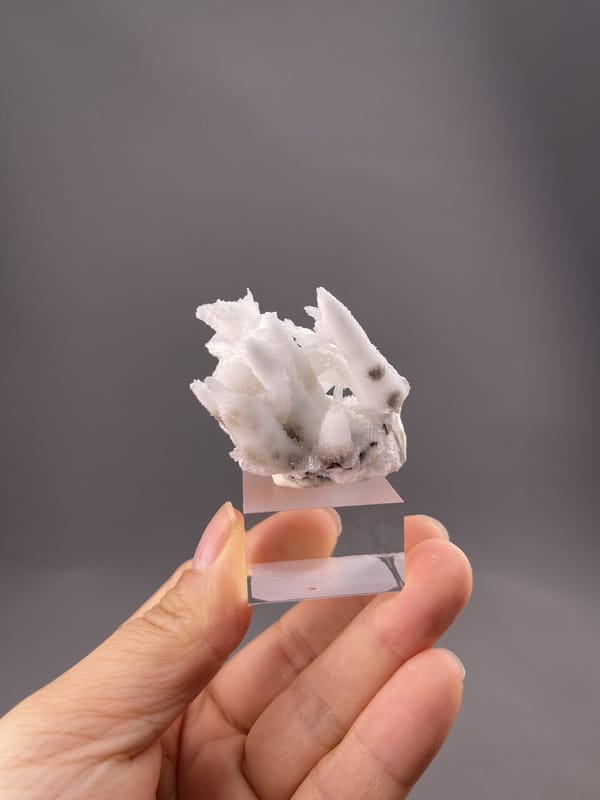
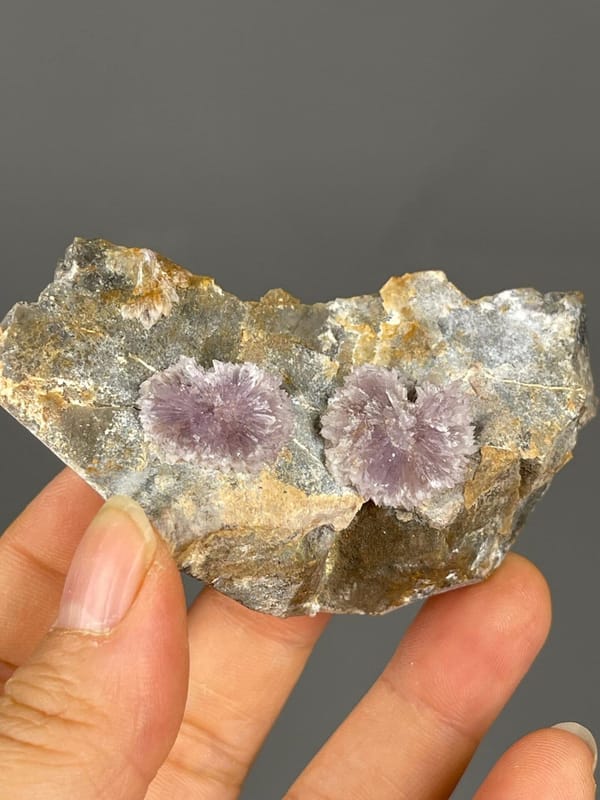
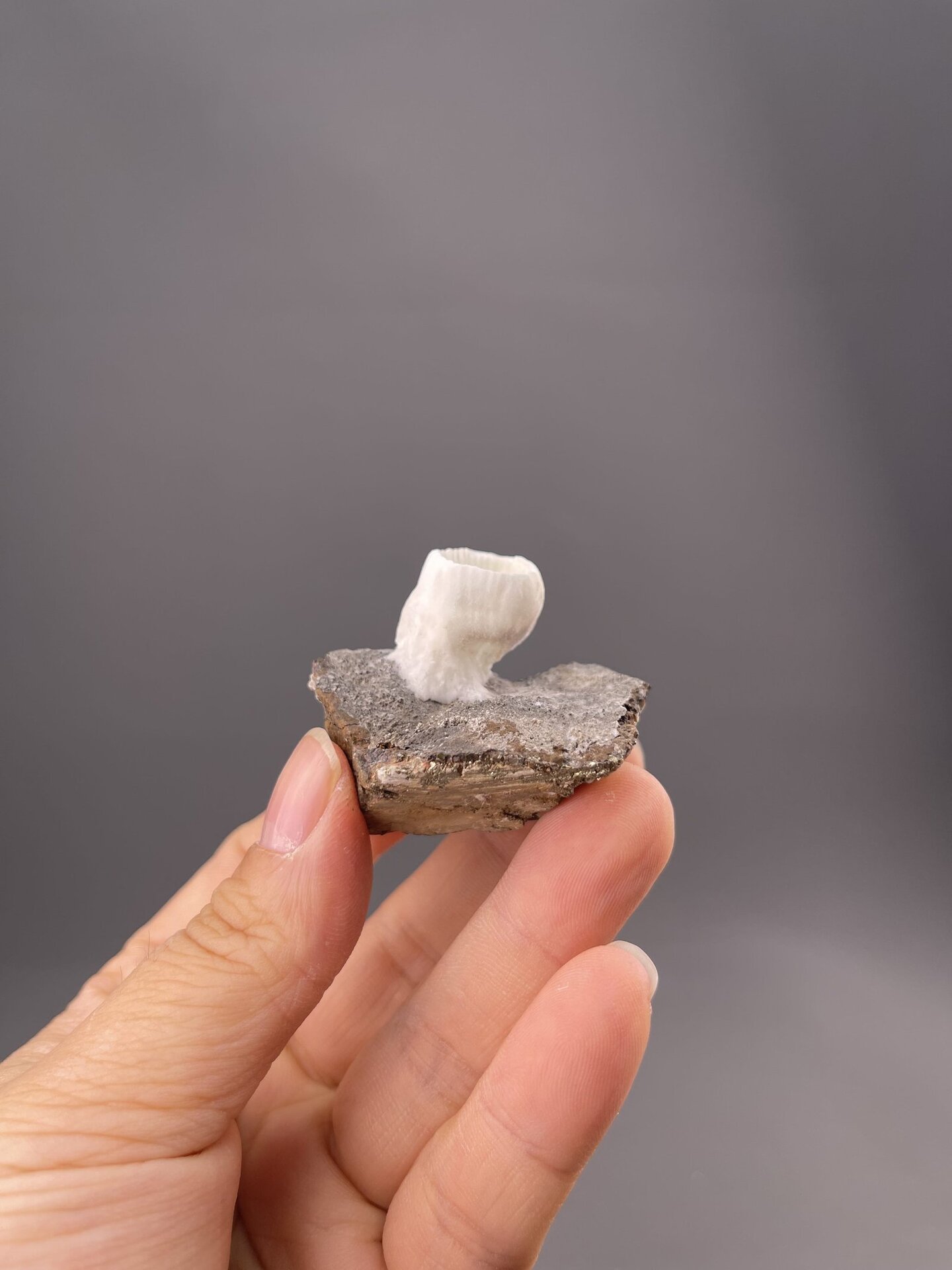
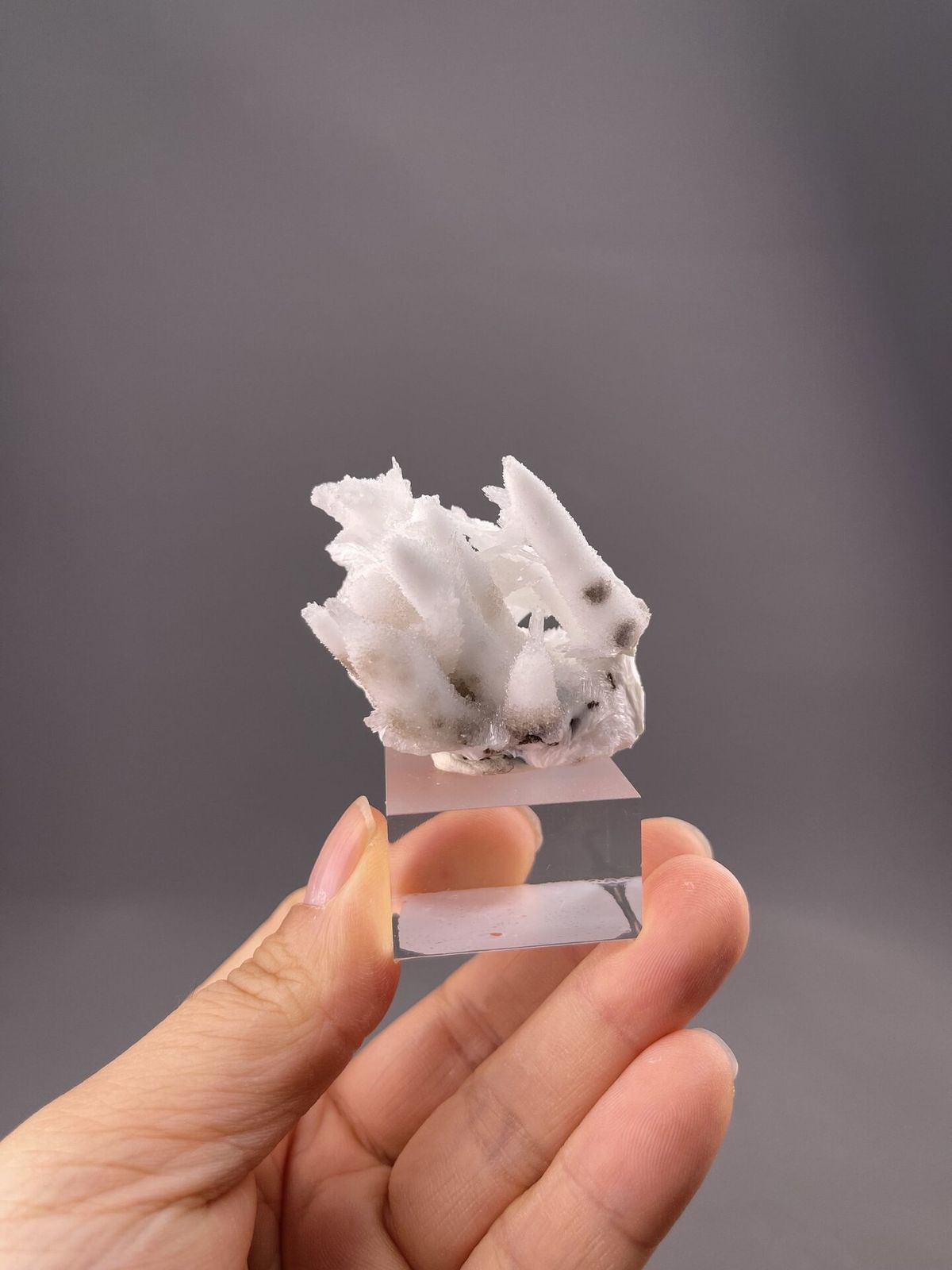
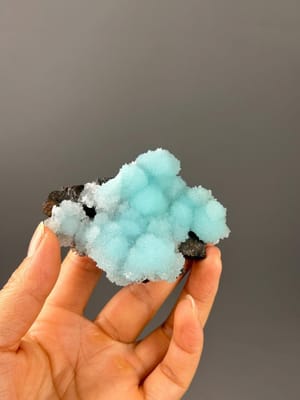
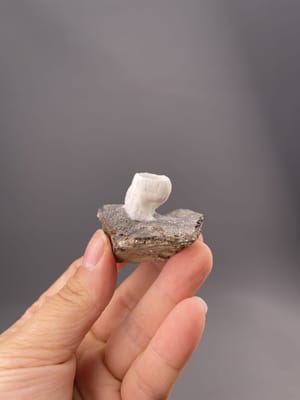
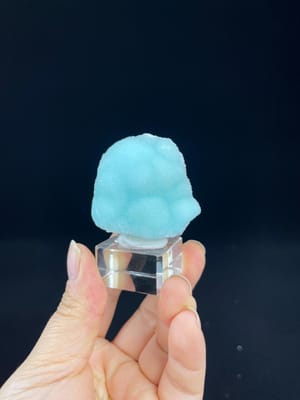
Aragonite's needle habit dominates our material: radiating white acicular sprays from Guizhou, sky-blue needle clusters and ribbed "goblet" forms from Yunnan, and the branching coral-like flos ferri from Austria's historic iron districts. The blue Yunnan material owes its color to trace copper — unusual for the species, which is most often white to cream.
Collector notes
At hardness 3.5–4 with brittle needles, aragonite is among the most fragile display minerals — dust with air, not cloth, and keep sprays where nothing can brush them. Chemically it is the same CaCO₃ as calcite; given geological time or heat it converts to its more stable cousin, which is why ancient aragonite is rare.
From our inventory
See Guizhou and Yunnan locality pages, or the calcite guide for the polymorph comparison.
Aragonite in China
Yunnan Province in south-west China is a notable source of collector aragonite, including delicate blue and white needle clusters and sprays from the zinc deposits of the Wenshan area, where it occurs alongside the region's famous copper-blue hemimorphite.
About Aragonite
Aragonite belongs to the carbonate class in the aragonite group and has the chemical formula CaCO3. It crystallizes in the orthorhombic system and is one of the most visually varied minerals in the collector market.
Identification & care
Aragonite typically forms prismatic, tabular, acicular; characteristic pseudohexagonal 'trilling' twins; also botryoidal, coralline, cave sinter. Its color range is broad, including colorless to white or grey, often stained blue, green, red, and or violet by impurities. The luster is vitreous, resinous, the streak is white, uncolored, and specimens are typically transparent, translucent. The cleavage is distinct on {010}, imperfect on {110}. The fracture is sub-conchoidal, which aids identification.
Collector context
Collector notes
For collectors, Aragonite is a benchmark crystalline species. Documented Chinese occurrences are recorded at Bayan Obo deposit, among others.
Naming history
Aragonite is named after Molina de Aragón in Spain, where it was first described in 1797. It and calcite are both calcium carbonate — identical chemistry, different crystal structures — which makes the pair the textbook example of polymorphism. Mollusc shells and pearl nacre are aragonite; most limestone is calcite.
Frequently asked questions
What is Aragonite?
Aragonite has the chemical formula CaCO3, crystallises in the Orthorhombic system, has a Mohs hardness of 3.5–4. Aragonite is a carbonate mineral prized by collectors for its exceptional color range, with notable Chinese occurrences.
What is the chemical formula of Aragonite?
The chemical formula of Aragonite is CaCO3.
What crystal system does Aragonite belong to?
Aragonite crystallises in the Orthorhombic crystal system.
Where is Aragonite found?
Notable localities for Aragonite include Yunnan Province, Ojuela / Mapimí, Guizhou Province, China.
Is Aragonite rare?
As a collector mineral, Aragonite is generally considered common.
Related minerals
Available Aragonite specimens
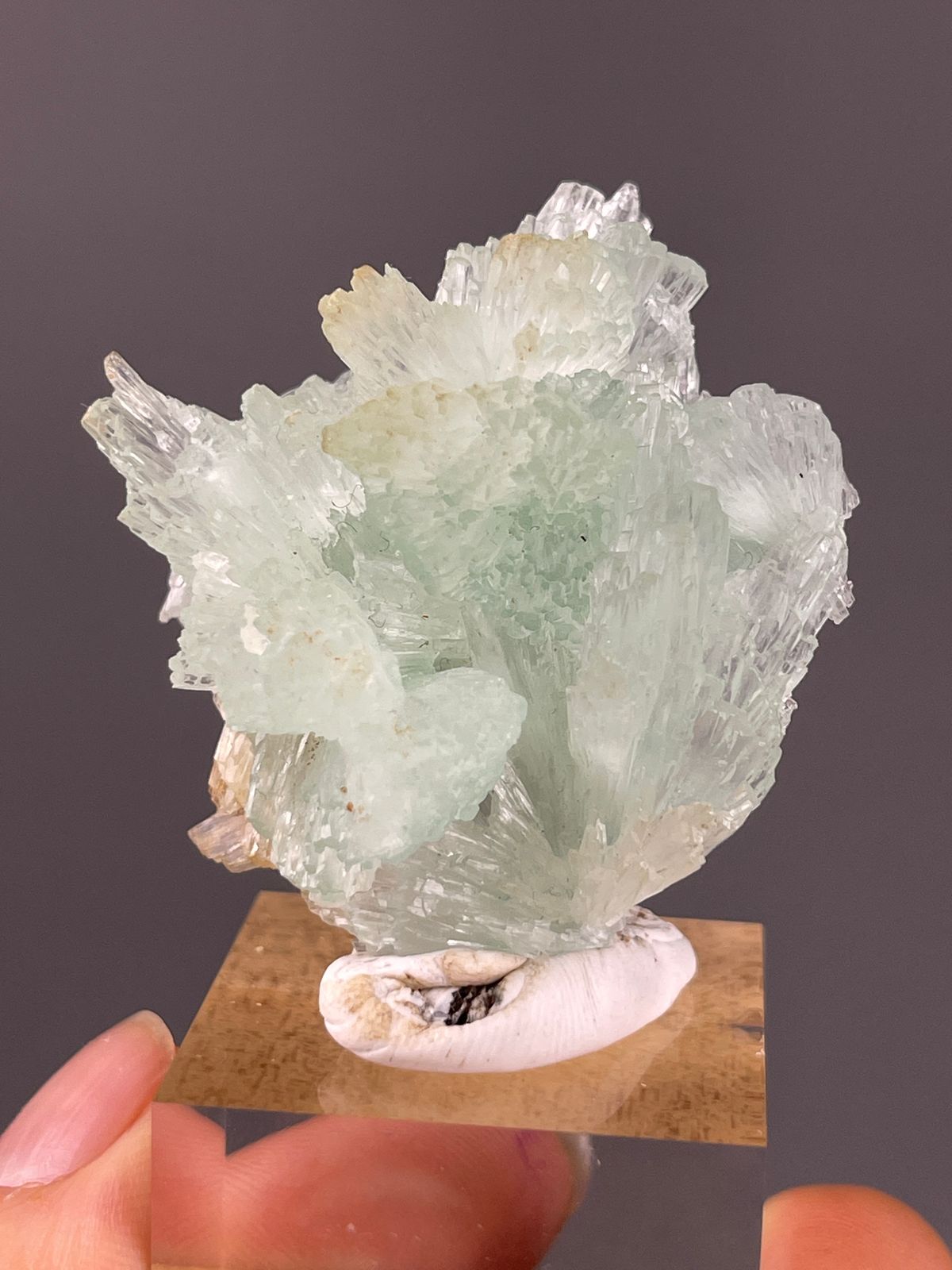
Clustered Blue Aragonite (“Lanwen Stone”) — Yunnan, China
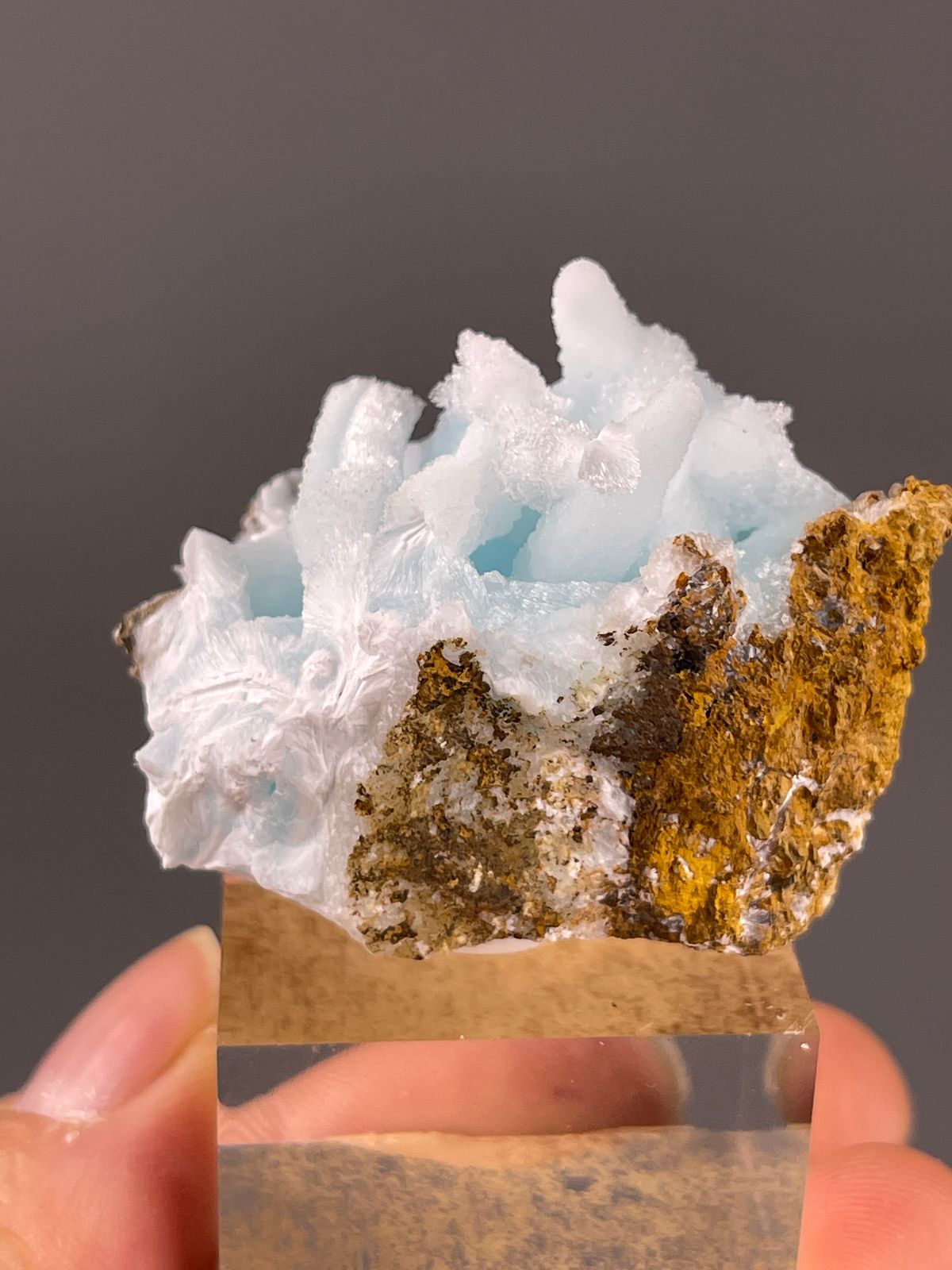
Botryoidal Columnar Blue Aragonite (“Lanwen Stone”) — Yunnan, China
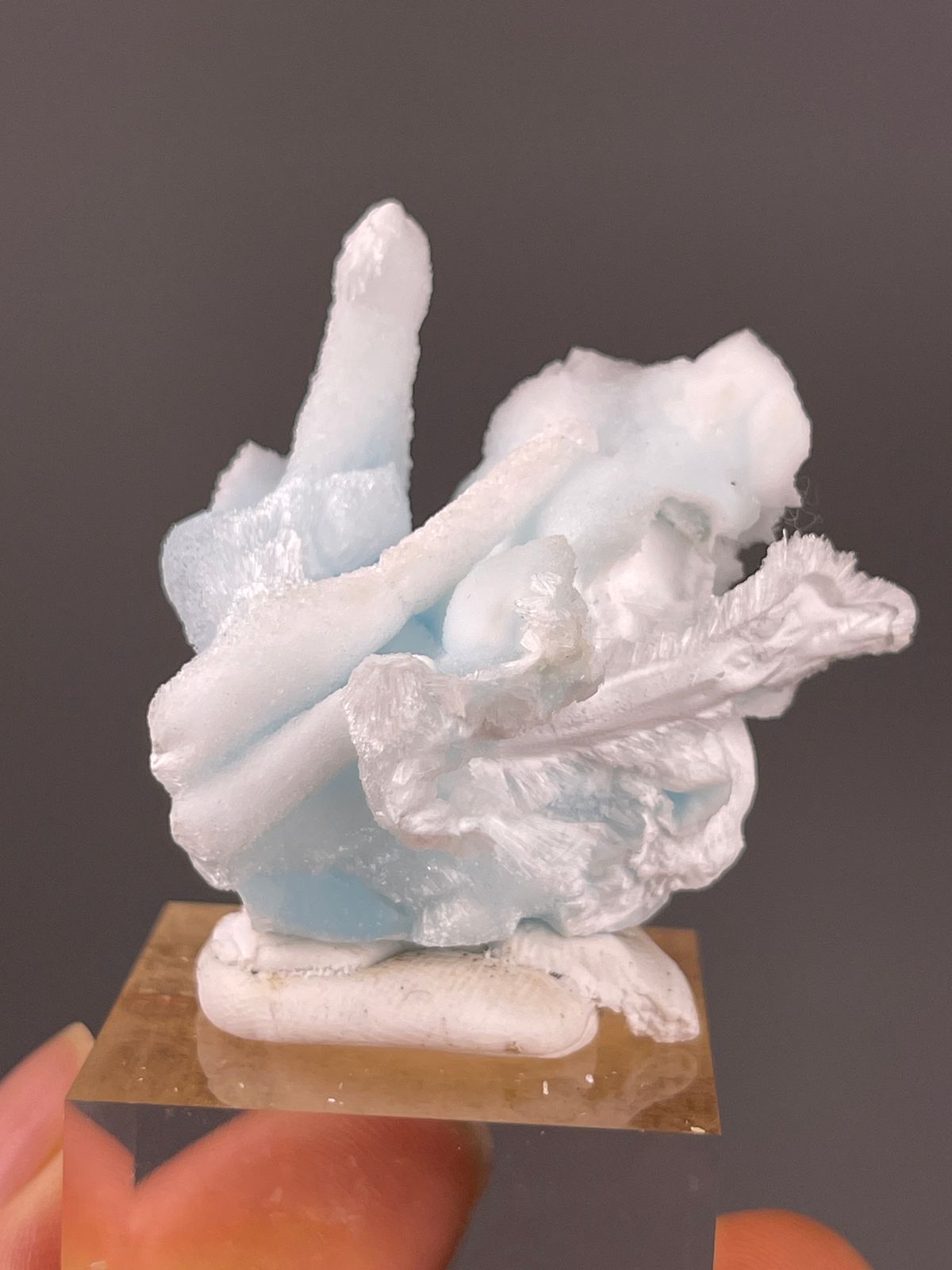
White Columnar Blue Aragonite (“Lanwen Stone”) — Yunnan, China
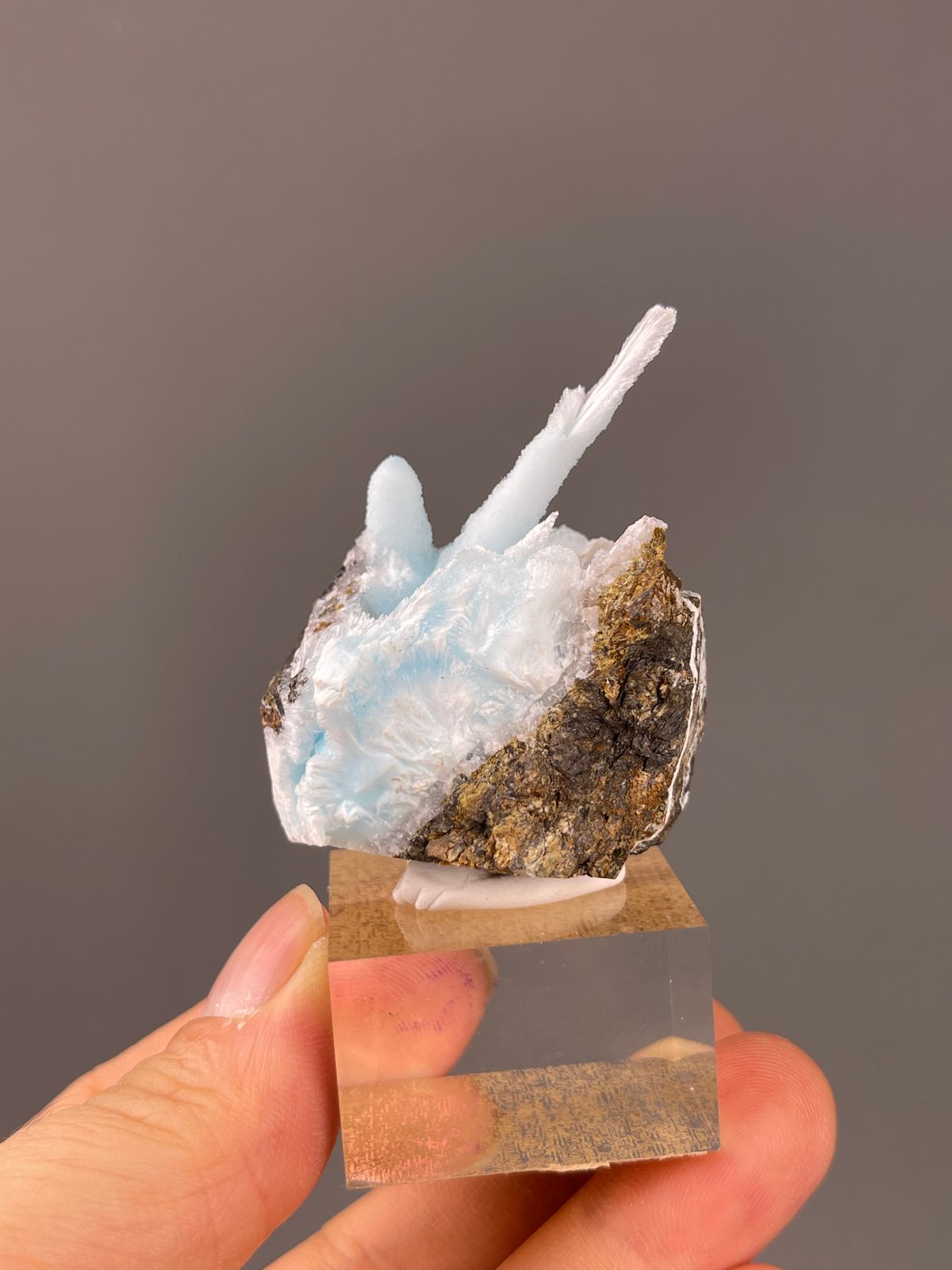
Columnar Blue Aragonite on Matrix (“Lanwen Stone”) — Yunnan, China
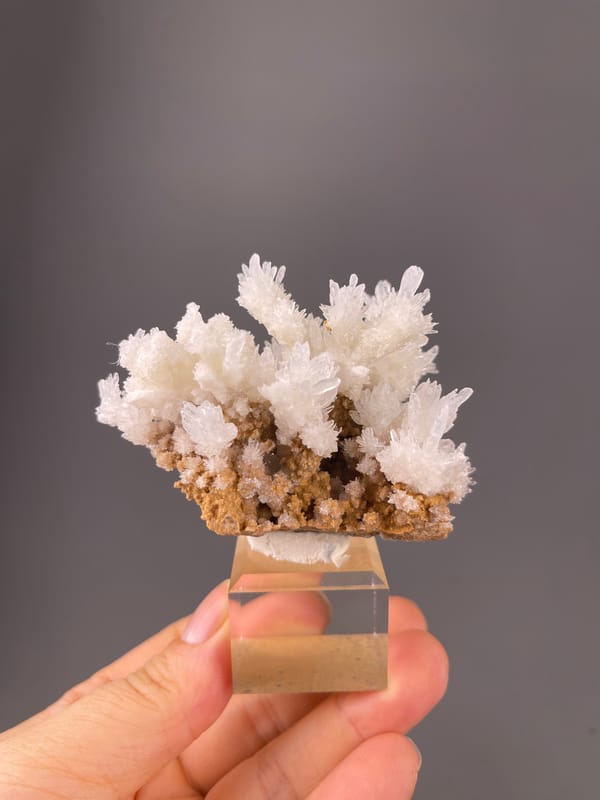
Aragonite Crystal Spray — Yunnan, China
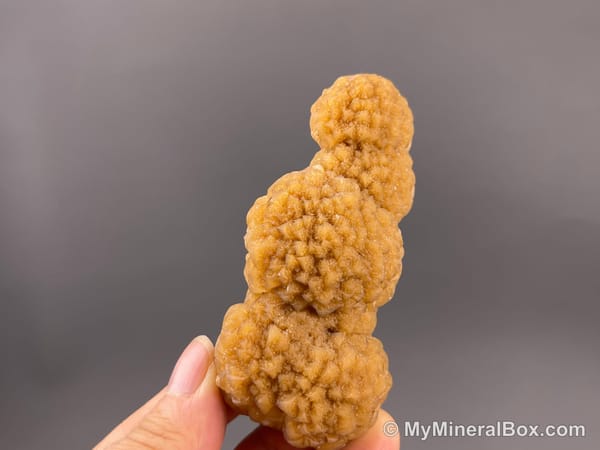
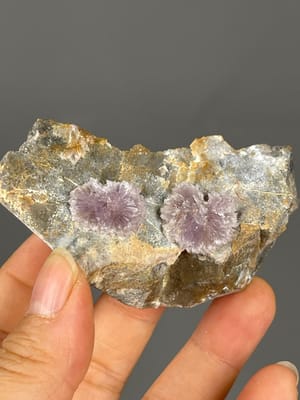
Botryoidal Aragonite/Calcite — Yunnan, China
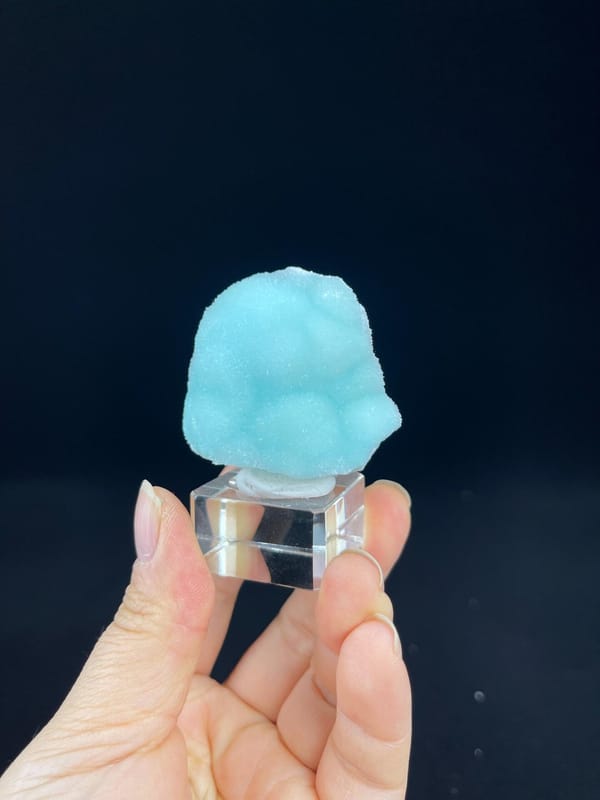
Pale Turquoise Aragonite Velvet Crust, Yunnan, China
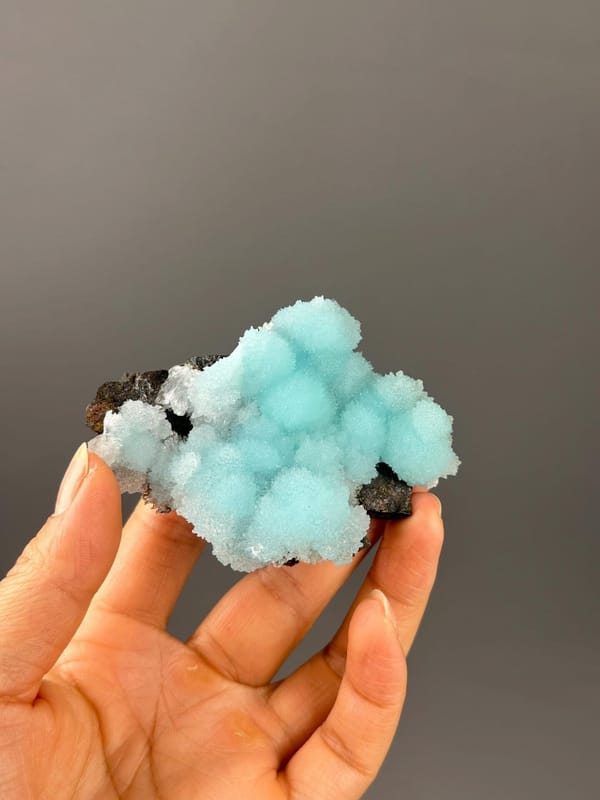
Sky-Blue Aragonite Cluster on Matrix, Yunnan