Azurite
Curated by Maggie Liu · Updated:
Azurite is a carbonate mineral recognized among collectors for its crystal form and distribution, with several world-class Chinese localities.
About Azuriteextended article
Azurite is the deep-blue companion to Malachite and one of the most visually iconic copper minerals. Like Malachite it is a copper carbonate, but with a different hydration ratio that gives it the diagnostic azure color. Azurite is the upper-oxidized-zone signal in copper deposits; over geological time it slowly weathers and pseudomorphs to Malachite, leaving square Azurite-shaped crystals colored green. Tsumeb (Namibia) produces celebrated crystals; Chessy in France is the historical type locality.
Notable varieties
- Tabular crystals (Tsumeb, Touissit)
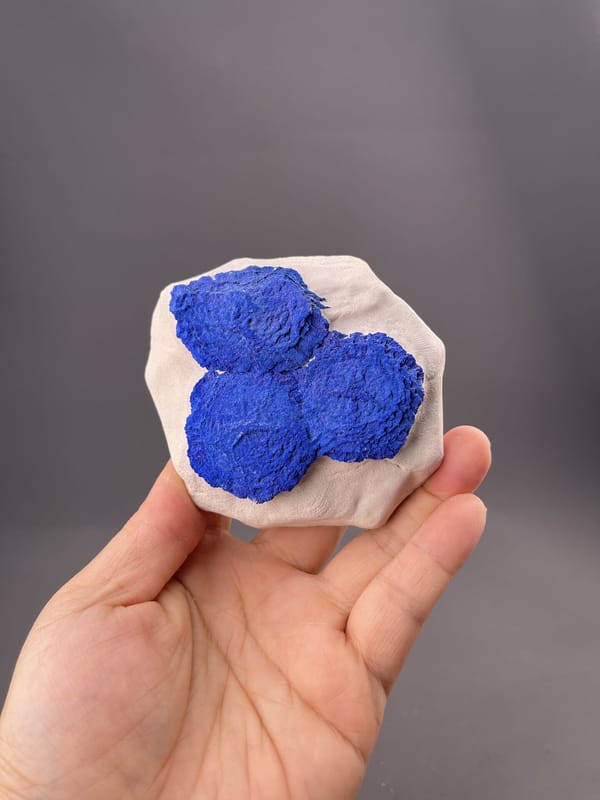
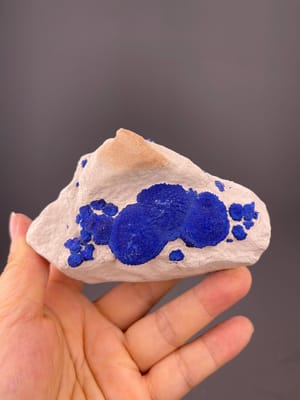
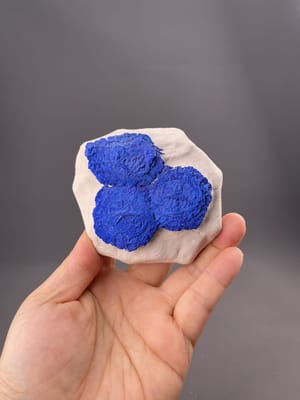
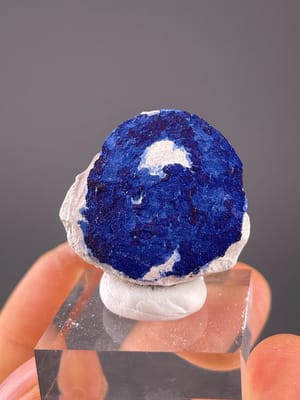
- Spherical aggregates ("balls" – Liufengshan, Anhui)
- Massive (carving stone)
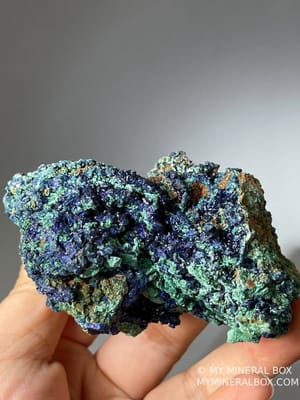
- "Azurmalach" (Azurite + Malachite intergrowth)
- Pseudomorphed by Malachite (square shapes, green color)
The Chinese angle
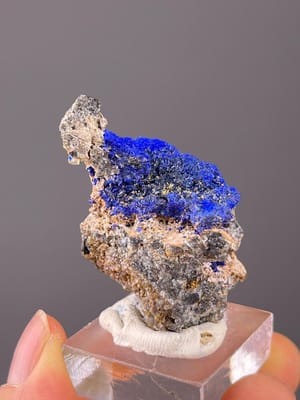
Xitieshan in Qinghai produces fine Chinese azurite, often as deep-blue rosettes on matrix. Yunnan copper-skarn deposits yield azurite paired with malachite in classic combination specimens. Liufengshan (Anhui) is internationally noted for spherical "azurite balls." Combination Azurite-Malachite specimens from these districts are highly sought by collectors – the dual color (deep blue + bright green) is characteristic.
About Azurite
Azurite is classified as a carbonate mineral in the malachite-rosasite group and has the chemical formula Cu₃(CO₃)₂(OH)₂. It crystallizes in the monoclinic system and holds a steady position among carbonate species. Its combination of structural character and global distribution make it a recognized species in both systematic and aesthetic collections.
Identification & care
Azurite typically forms tabular, prismatic, massive, botryoidal (less common than malachite). Its color is typically azure blue to deep blue, berlin blue and dark blue. The luster is vitreous, the streak is blue, and specimens range from transparent to opaque. The cleavage is perfect on {011}, fair on {100}. The fracture is conchoidal, which aids identification.
Collector context
How it forms
In terms of geology, Azurite forms in secondary mineral in oxidized zones of copper ore deposits. It is commonly found in association with malachite, chrysocolla, cuprite, calcite, native copper.
Classic Chinese localities
Jiama Cu-polymetallic deposit and Dexing Cu-Mo-Au ore field are an important Chinese source for the species.
Why collectors care
Azurite is a frequently-sought species in serious collections because its habit is recognizable, its color often strong, and its best examples unmistakable even at a distance. Chinese material has driven much of the recent visual shift in the species — sharper crystals, deeper colors, cleaner matrix.
What affects value
Value in Azurite is assessed, in typical order of weight, against: (1) locality provenance; (2) size relative to the species norm; (3) crystal form and termination sharpness; (4) color saturation and zoning; (5) transparency and internal clarity; (6) matrix quality and aesthetic balance; (7) condition (absence of damage, chips, or repair). Cleaning quality and verified locality documentation act as multipliers across the above.
Naming history
Azurite traces back through Old French azur to the Persian lazhward — the same root that gives lapis lazuli and the English word azure itself. So azurite is, etymologically, simply "the blue one." It and malachite are chemically close copper carbonates, which is why azurite slowly alters to green malachite over geological time, and why the two are so often found grown together.
Frequently asked questions
What is Azurite?
Azurite has the chemical formula Cu₃(CO₃)₂(OH)₂, crystallises in the Monoclinic system, has a Mohs hardness of 3.5–4. Azurite is a carbonate mineral recognized among collectors for its crystal form and distribution, with several world-class Chinese localities.
What is the chemical formula of Azurite?
The chemical formula of Azurite is Cu₃(CO₃)₂(OH)₂.
What crystal system does Azurite belong to?
Azurite crystallises in the Monoclinic crystal system.
Where is Azurite found?
Notable localities for Azurite include Yunnan Province, Tsumeb, Milpillas Mine, Bisbee, China.
Is Azurite rare?
As a collector mineral, Azurite is generally considered common.
Related minerals
Available Azurite specimens
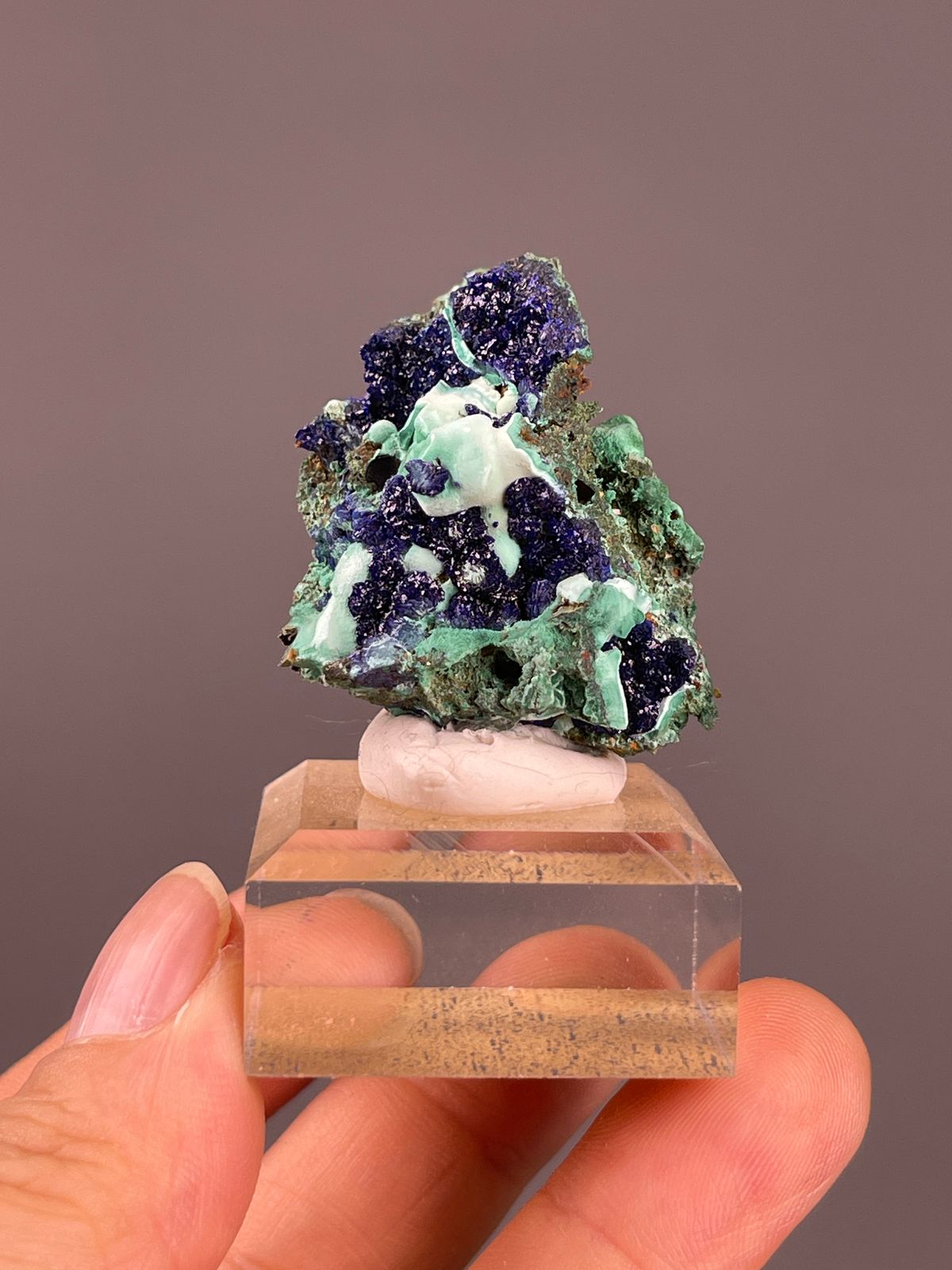
Deep Blue Azurite in Pale Green Malachite | Anhui, China
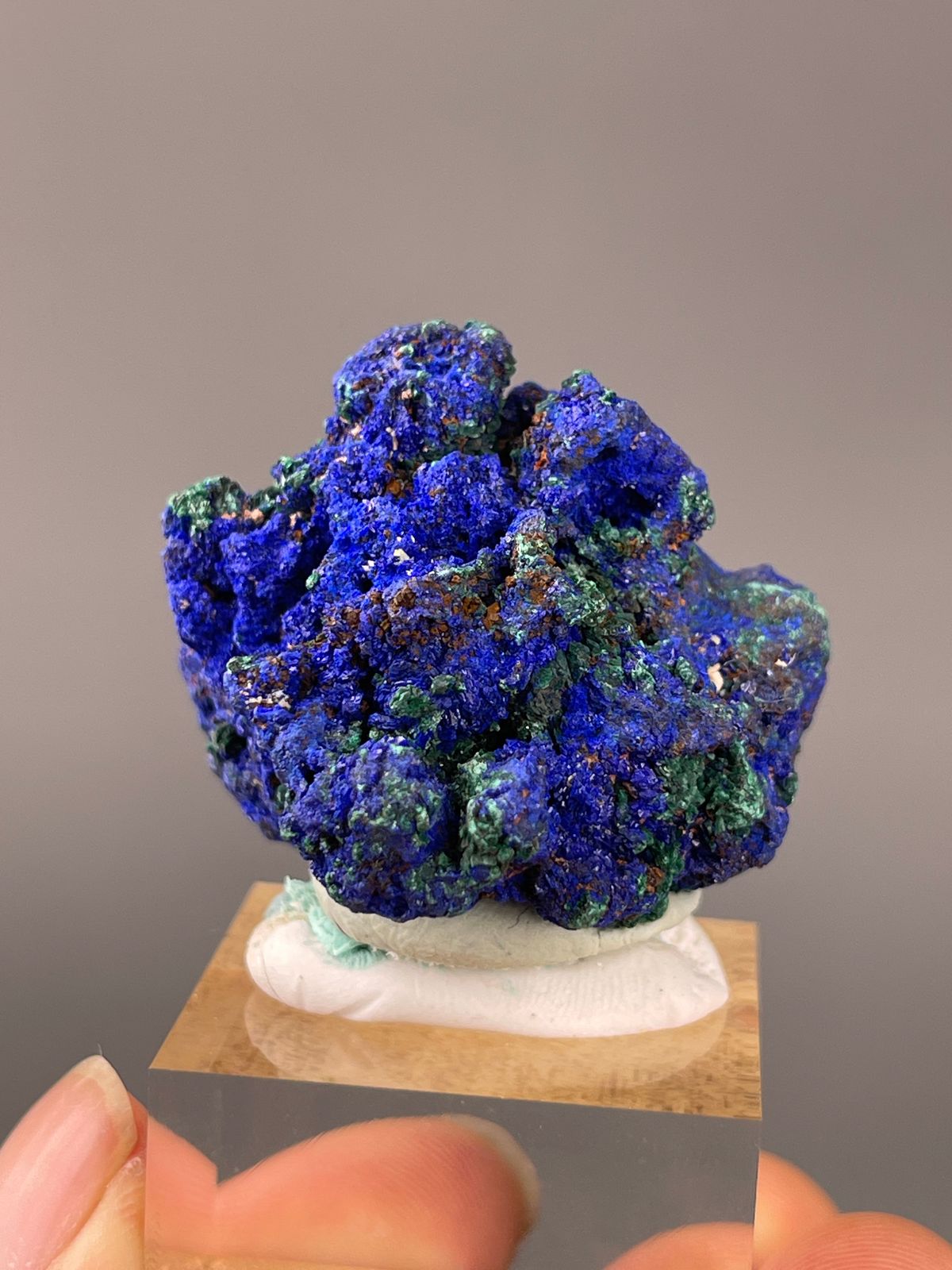
Blue Azurite with Malachite — Democratic Republic of the Congo
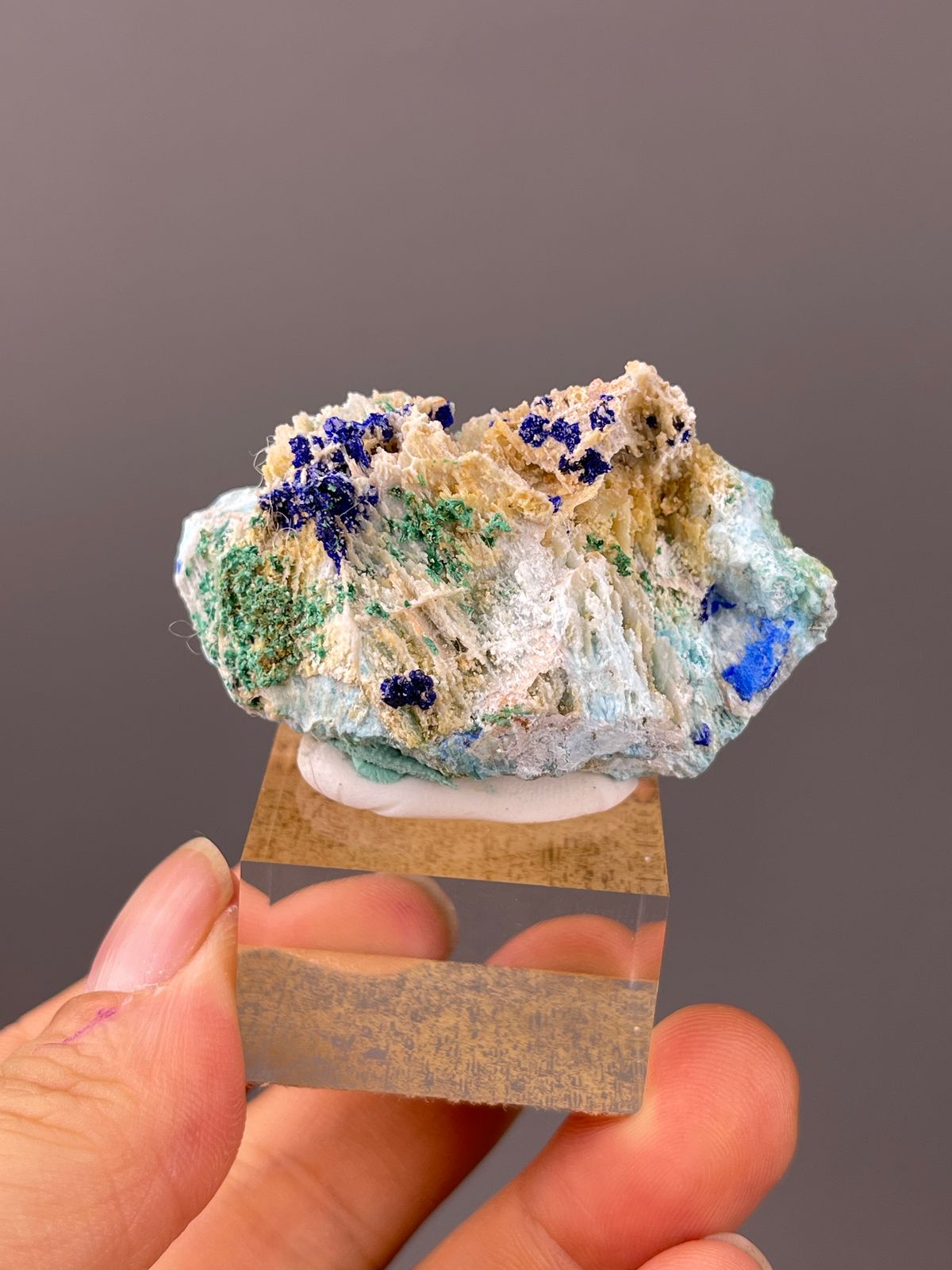
Fibrous Blue Azurite with Malachite and Gibbsite — Qinglong, Guizhou, China
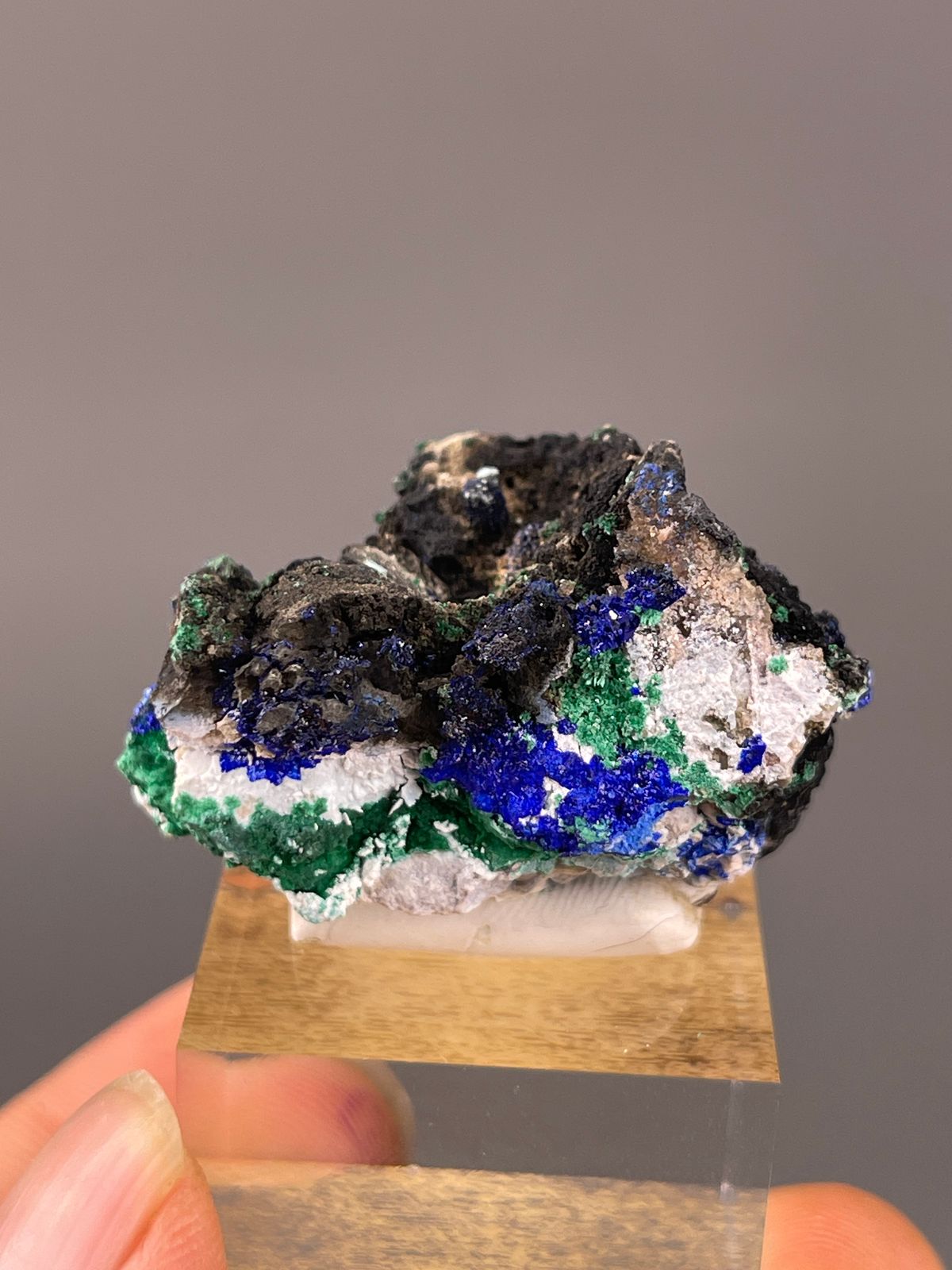
20 g Blue Azurite with Malachite and Gibbsite — Qinglong, Guizhou, China
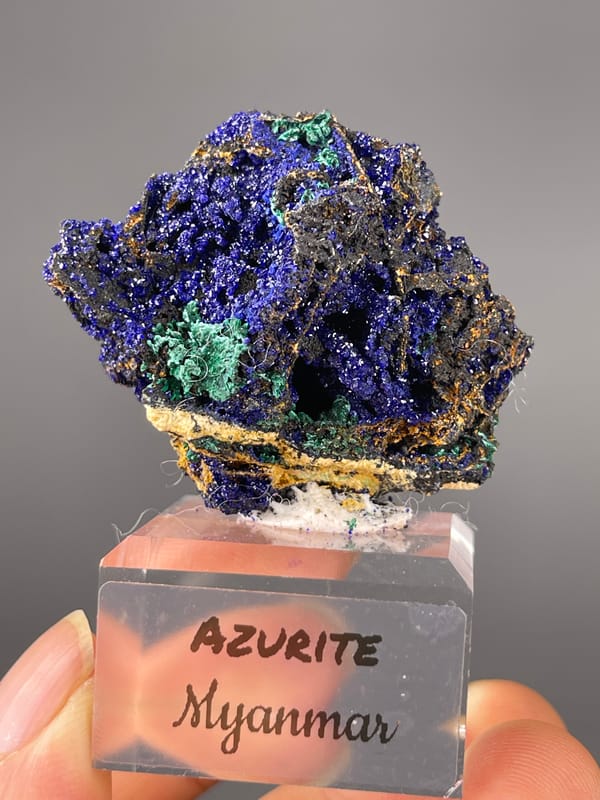
Blue Azurite with Malachite — Myanmar
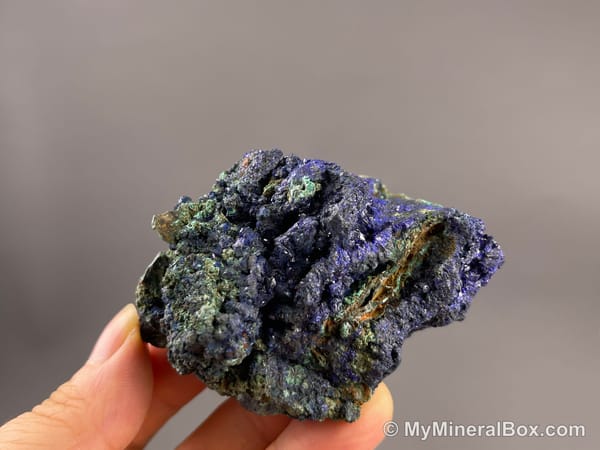
Azurite with Malachite/Chrysocolla — Locality Unconfirmed
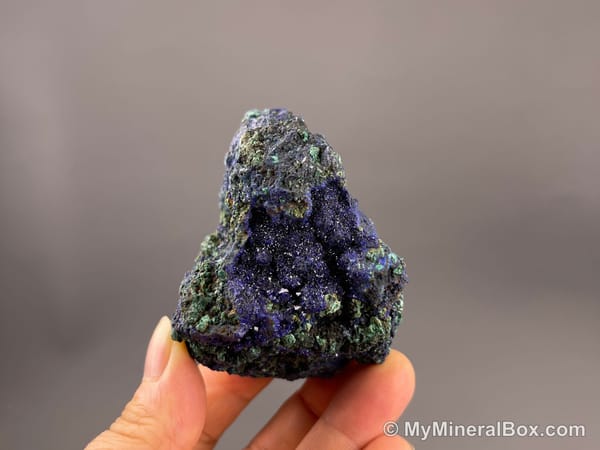
Azurite Druse with Malachite, Locality Unconfirmed
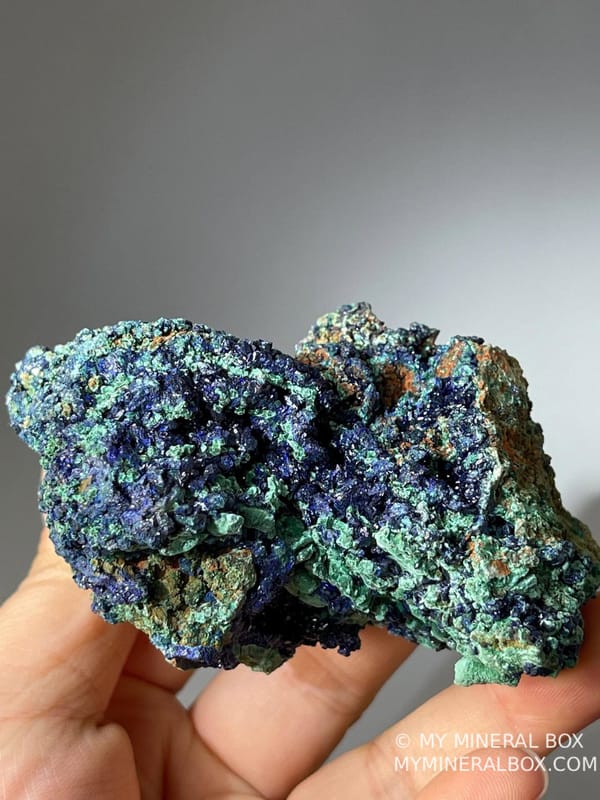
Azurite and Malachite Specimen, China
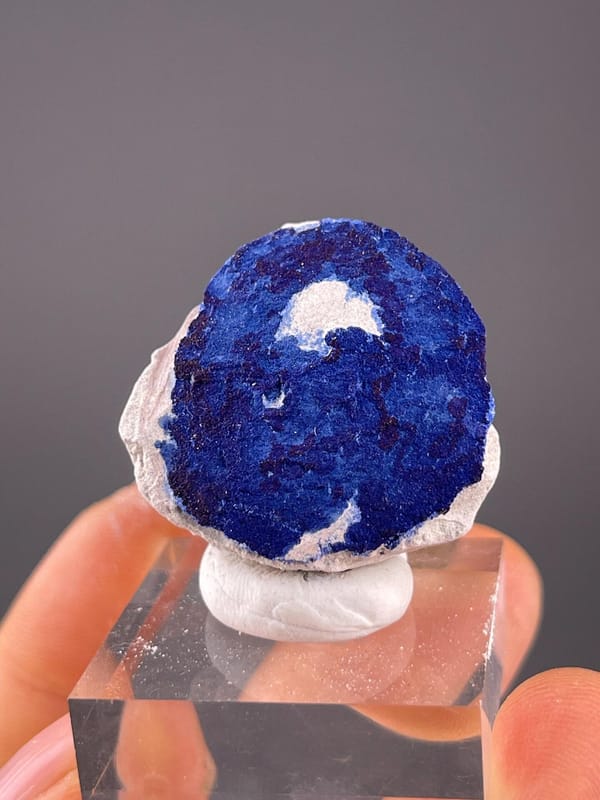
Azurite Sun Crystal, Malbunka Mine, Australia
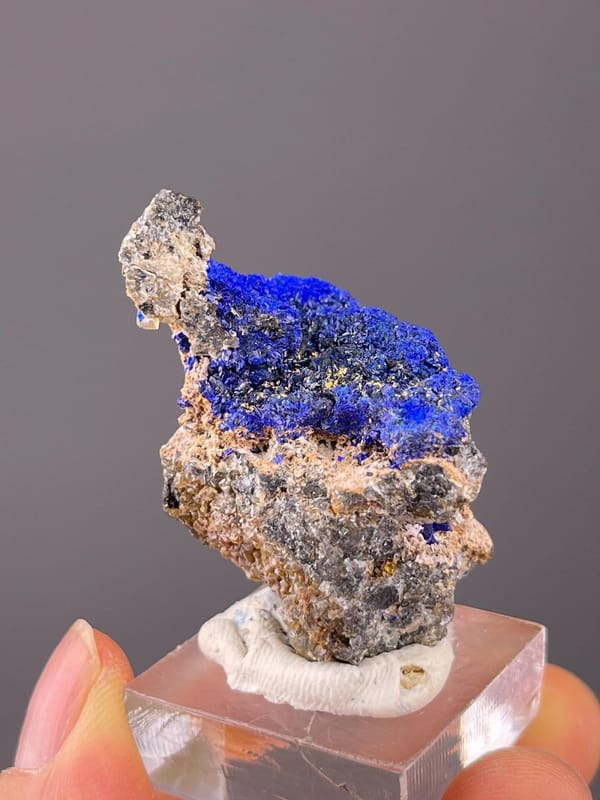
Azurite Specimen, China
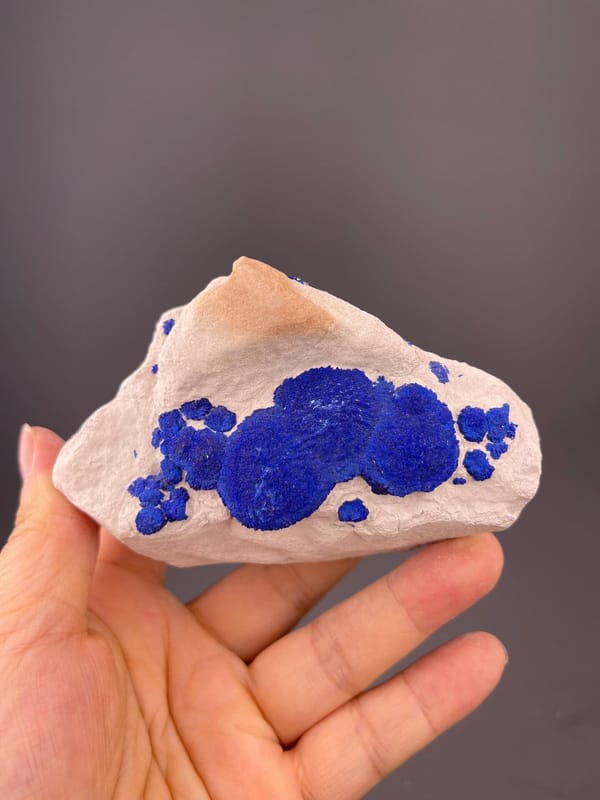
Azurite Rosette Cluster – Vivid Royal Blue – Australia
Recently sold Azurite specimens
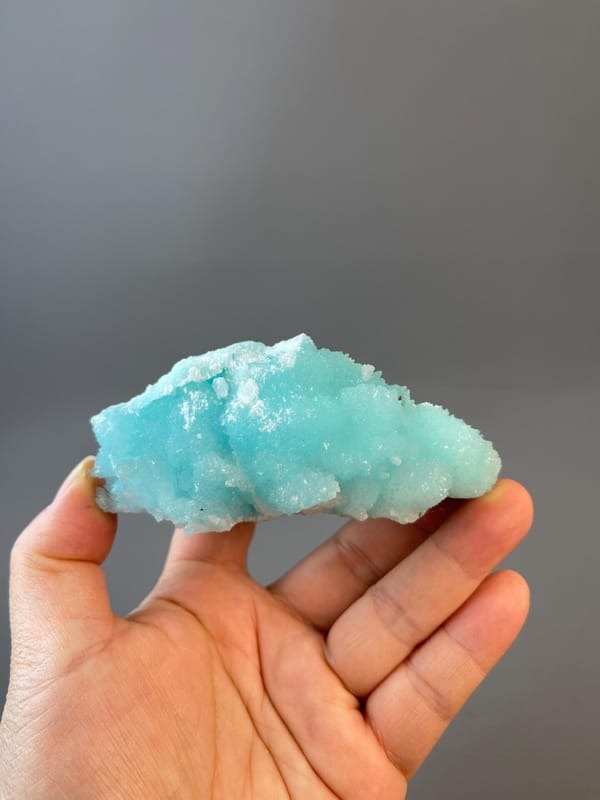
Pale Blue Azurite Crust with White Zones, Yunnan, China
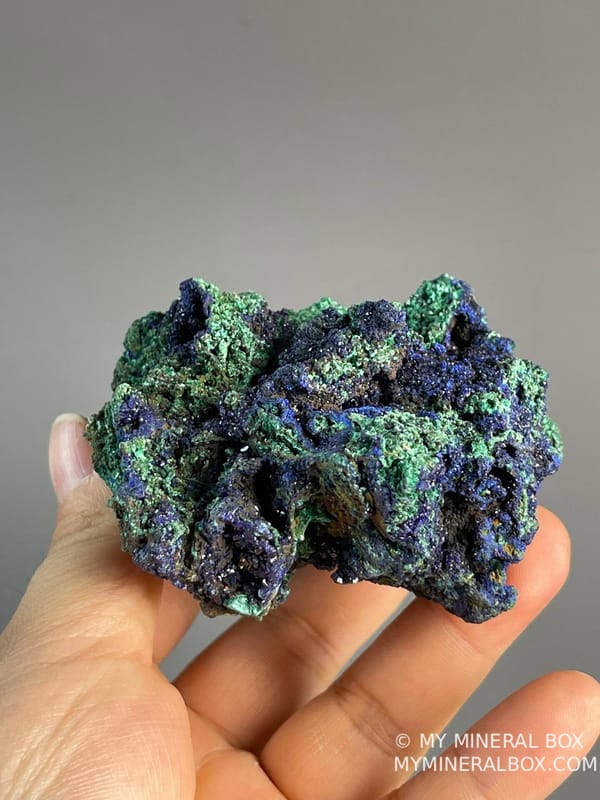
Azurite with Malachite, Morocco
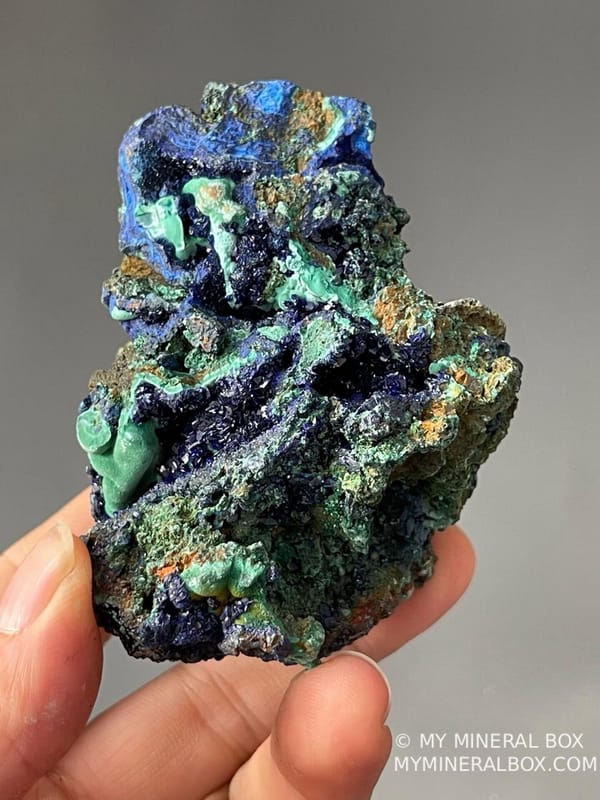
Azurite with Malachite Crystal Formation, China
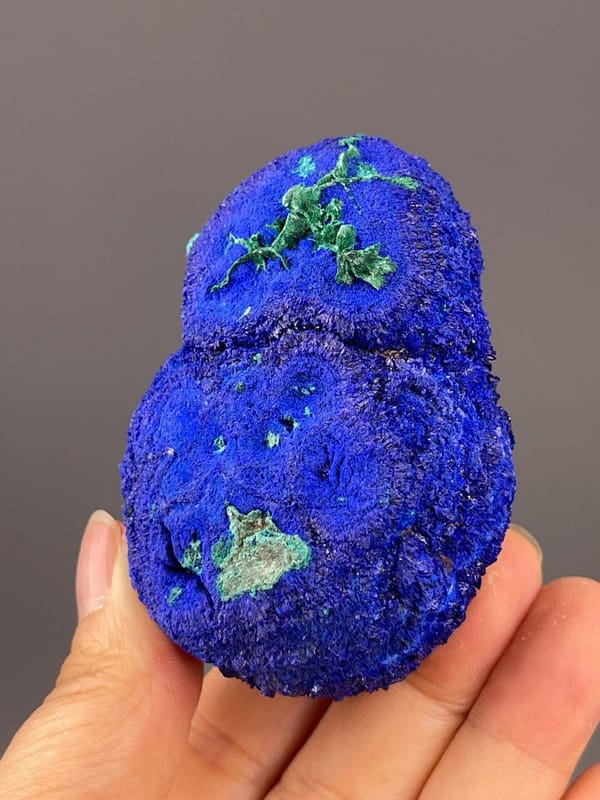
Azurite-Malachite Specimen – Museum Grade – China
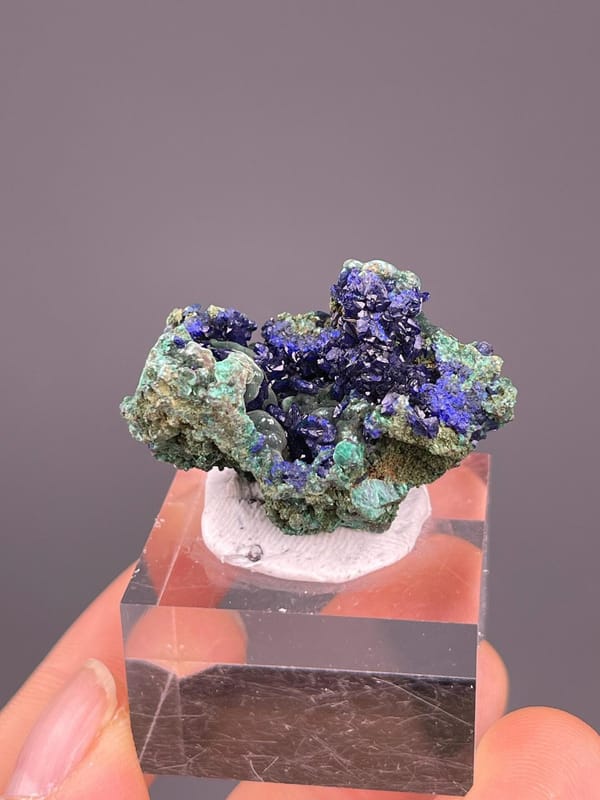
Azurite and Malachite Cluster – Blue and Green Crystals