Chalcopyrite
Curated by Maggie Liu · Updated:
Chalcopyrite is a sulfide mineral known for its striking metallic crystals, with several world-class Chinese localities.
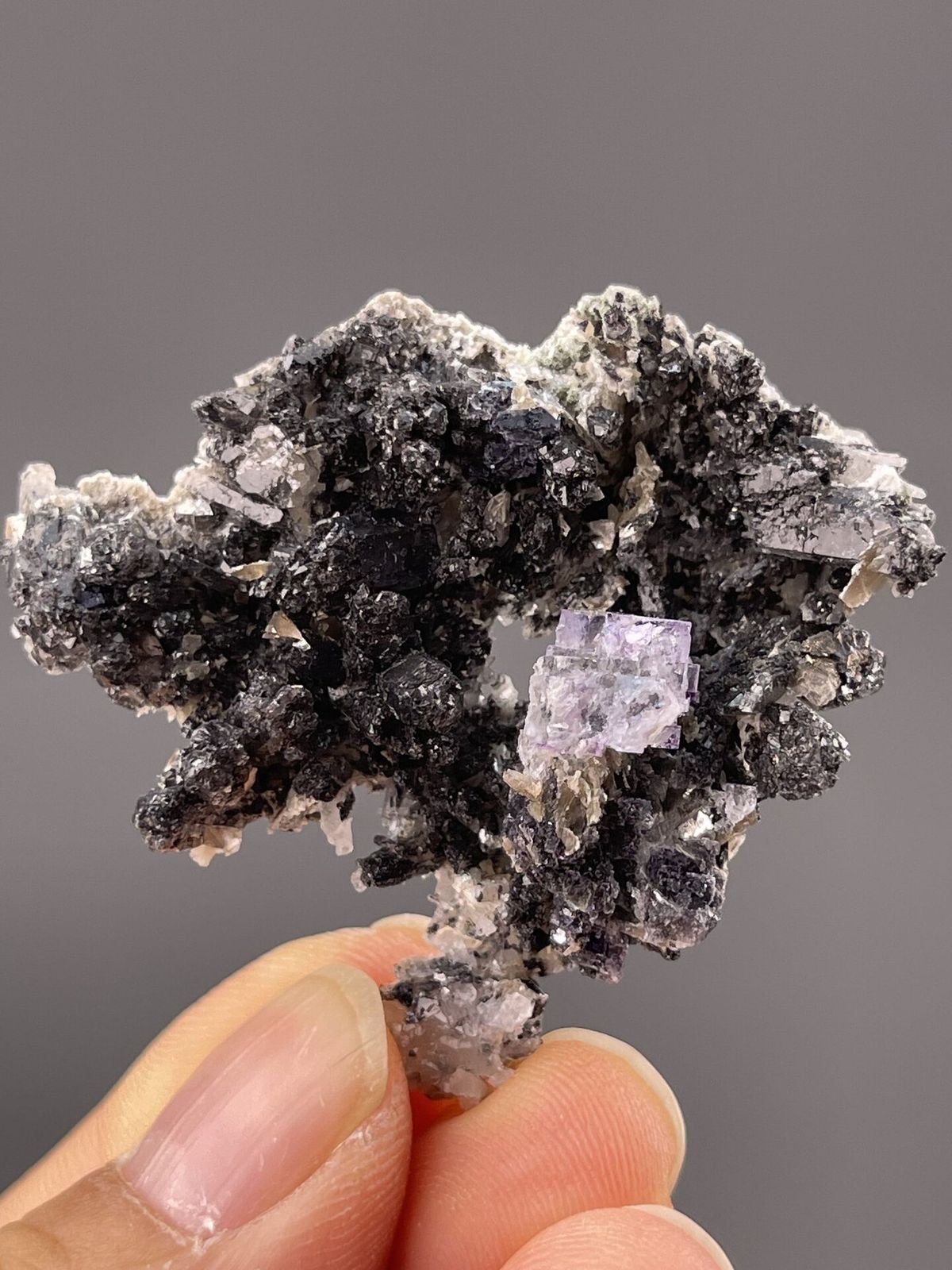
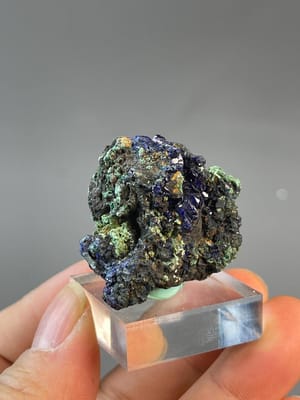
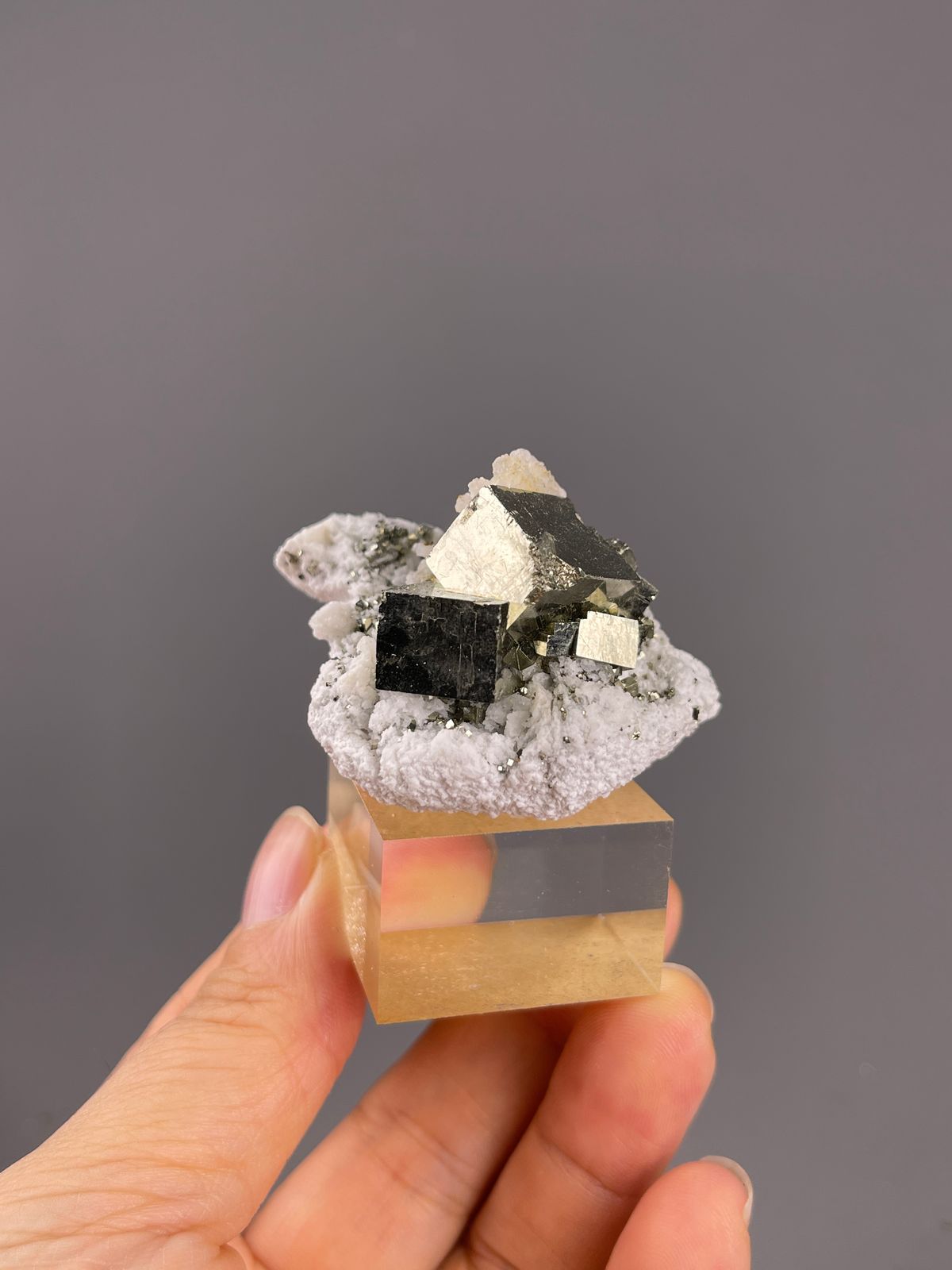
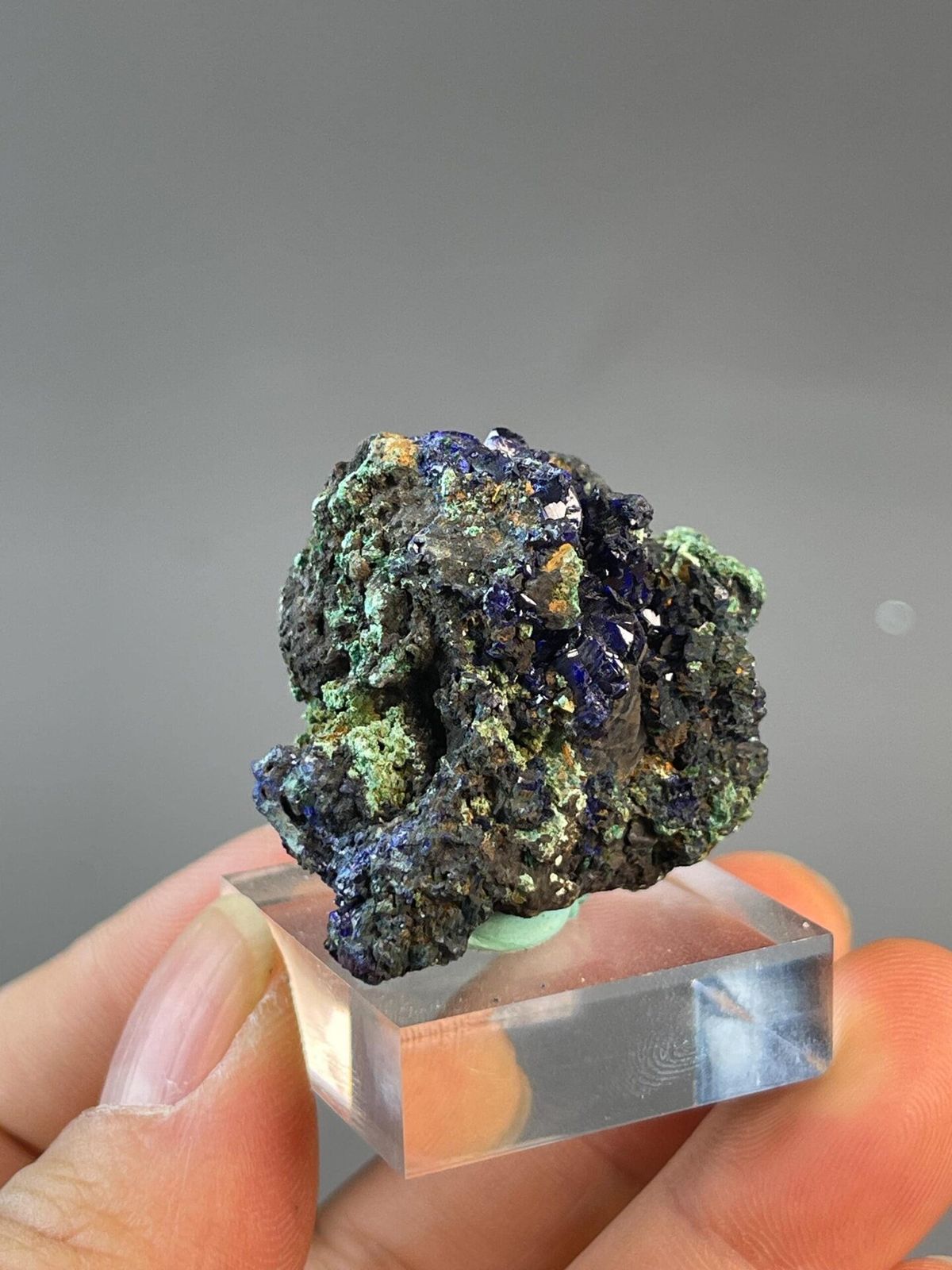
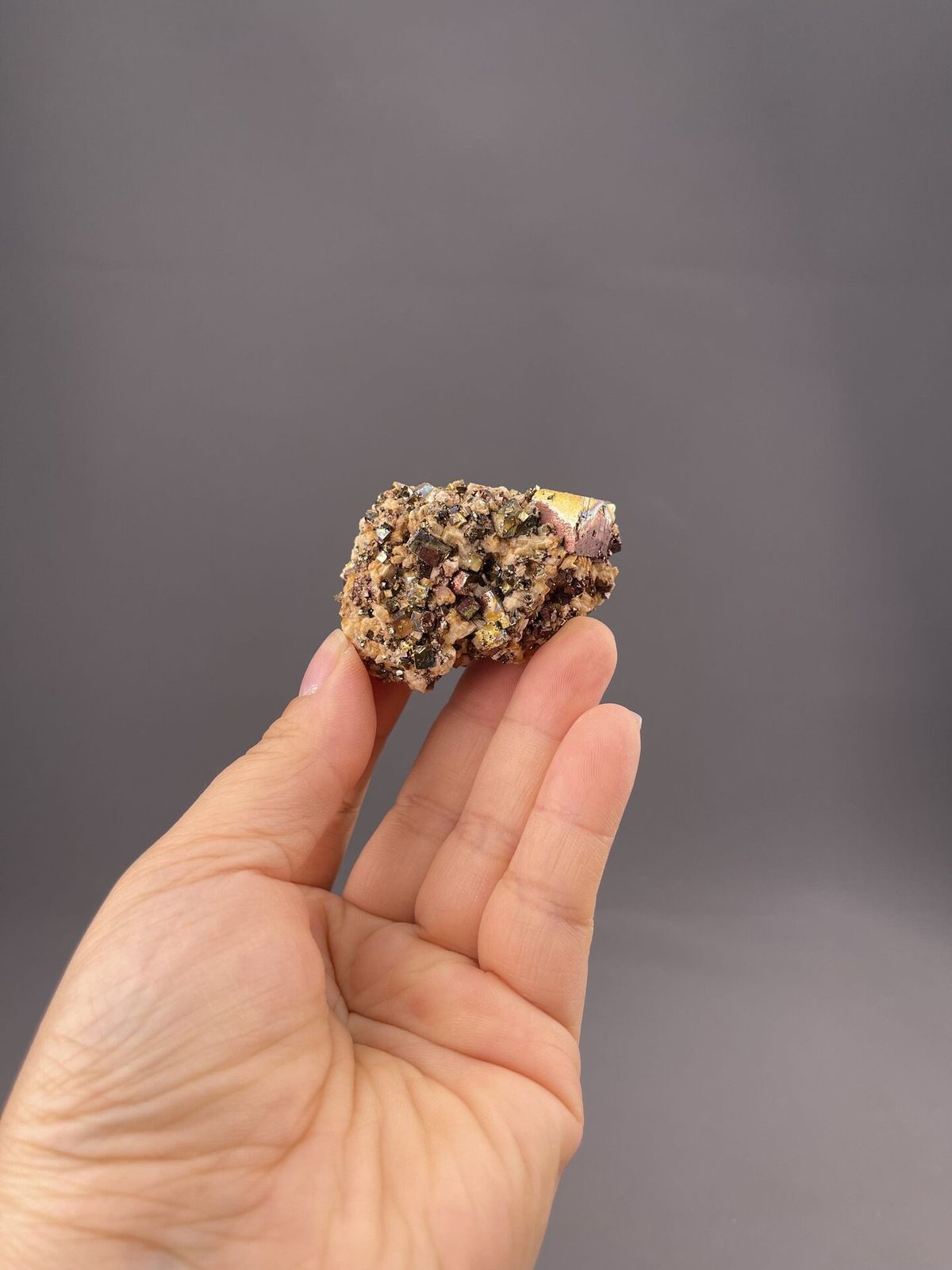
Chalcopyrite is copper iron sulfide (CuFeS₂), the most important ore of copper, often tarnishing to the iridescent blues and purples called 'peacock ore'.
About Chalcopyriteextended article
Chalcopyrite is a brassy gold-coloured sulfide and the world's principal source of copper. Freshly broken it resembles pyrite or gold, but it is softer and frequently develops a spectacular iridescent tarnish of blue, purple and gold that collectors know as peacock ore.
Identifying chalcopyrite
Chalcopyrite is soft (3.5–4) — easily scratched, unlike the harder, paler pyrite it is often confused with — and has a greenish-black streak. Its wedge-shaped (disphenoidal) crystals and brassy, iridescent surfaces are characteristic. It occurs in hydrothermal veins, porphyry copper systems and skarns, usually with other sulfides.
Where it is found
Chalcopyrite is mined for copper around the world. China is a major copper producer; the Daye iron-copper district in Hubei Province and other Chinese skarn and vein deposits yield chalcopyrite with sphalerite, galena, pyrite and quartz. Fine crystallised specimens also come from Spain, the French Alps, and the United States.
What collectors look for
Collectors seek bright, well-formed crystals and naturally iridescent 'peacock' surfaces, as well as aesthetic associations with sparkling quartz, sphalerite or galena. Natural untreated iridescence is valued over artificially tarnished material.
About Chalcopyrite
Chalcopyrite is a sulfide mineral in the chalcopyrite group and has the chemical formula CuFeS₂. It crystallizes in the tetragonal system and is one of the most visually varied minerals in the collector market. Its combination of structural character and global distribution make it a recognized species in both systematic and aesthetic collections.
Identification & care
Chalcopyrite typically forms tetrahedral; massive (most common); granular; botryoidal (rare). Its color range is broad, including brass-yellow on fresh surface, tarnishes to iridescent purple, blue, red, and green (called 'peacock ore' when iridescent). The luster is metallic, the streak is greenish-black, and specimens are typically opaque. The cleavage is poor on {112}. The fracture is irregular/uneven, which aids identification.
Collector context
How it forms
In terms of geology, Chalcopyrite forms in hydrothermal veins; porphyry copper deposits; skarn; volcanogenic massive sulfide. It is commonly found in association with pyrite, sphalerite, galena, bornite, quartz, calcite.
Classic Chinese localities
Jiama Cu-polymetallic deposit, Dexing Cu-Mo-Au ore field and Huanggang Fe-Sn deposit are an important Chinese source for the species.
Why collectors care
Collectors gravitate to Chalcopyrite for the drama of its metallic luster and the geometry of its crystals — long striated blades, parallel sprays, or radiating clusters depending on the specimen. A large terminated group of chalcopyrite with intact luster is a centerpiece-level display object, and Chinese localities (where relevant) have produced some of the world's best-preserved material.
What affects value
Value in Chalcopyrite is assessed, in typical order of weight, against: (1) locality provenance; (2) crystal size; (3) termination quality and crystal completeness; (4) metallic luster integrity (absence of tarnish); (5) crystal habit elegance (parallel, radiating, or bladed); (6) matrix contrast and aesthetic balance; (7) condition and absence of re-attached crystals. Verified locality documentation and absence of cleaning residue act as strong multipliers across the above.
Naming history
Chalcopyrite is "copper pyrite," from Greek chalkos, copper, plus pyrite. Chalkos also names Chalcolithic — the Copper Age — and chalcopyrite is the world's most important copper ore. Its famous peacock iridescence is a surface tarnish, not the fresh mineral, which is plain brassy yellow.
Frequently asked questions
What is Chalcopyrite?
Chalcopyrite has the chemical formula CuFeS2, crystallises in the Tetragonal system, has a Mohs hardness of 3.5–4. Chalcopyrite is a sulfide mineral known for its striking metallic crystals, with several world-class Chinese localities.
What is the chemical formula of Chalcopyrite?
The chemical formula of Chalcopyrite is CuFeS2.
What crystal system does Chalcopyrite belong to?
Chalcopyrite crystallises in the Tetragonal crystal system.
Where is Chalcopyrite found?
Notable localities for Chalcopyrite include Dexing Mine, Dabaoshan Polymetallic Mine, Jiangxi Province, Cornwall.