
Emerald
Curated by Maggie Liu · Updated:
Emerald is a mineral recognized among collectors for its crystal form and distribution, with known Chinese sources.
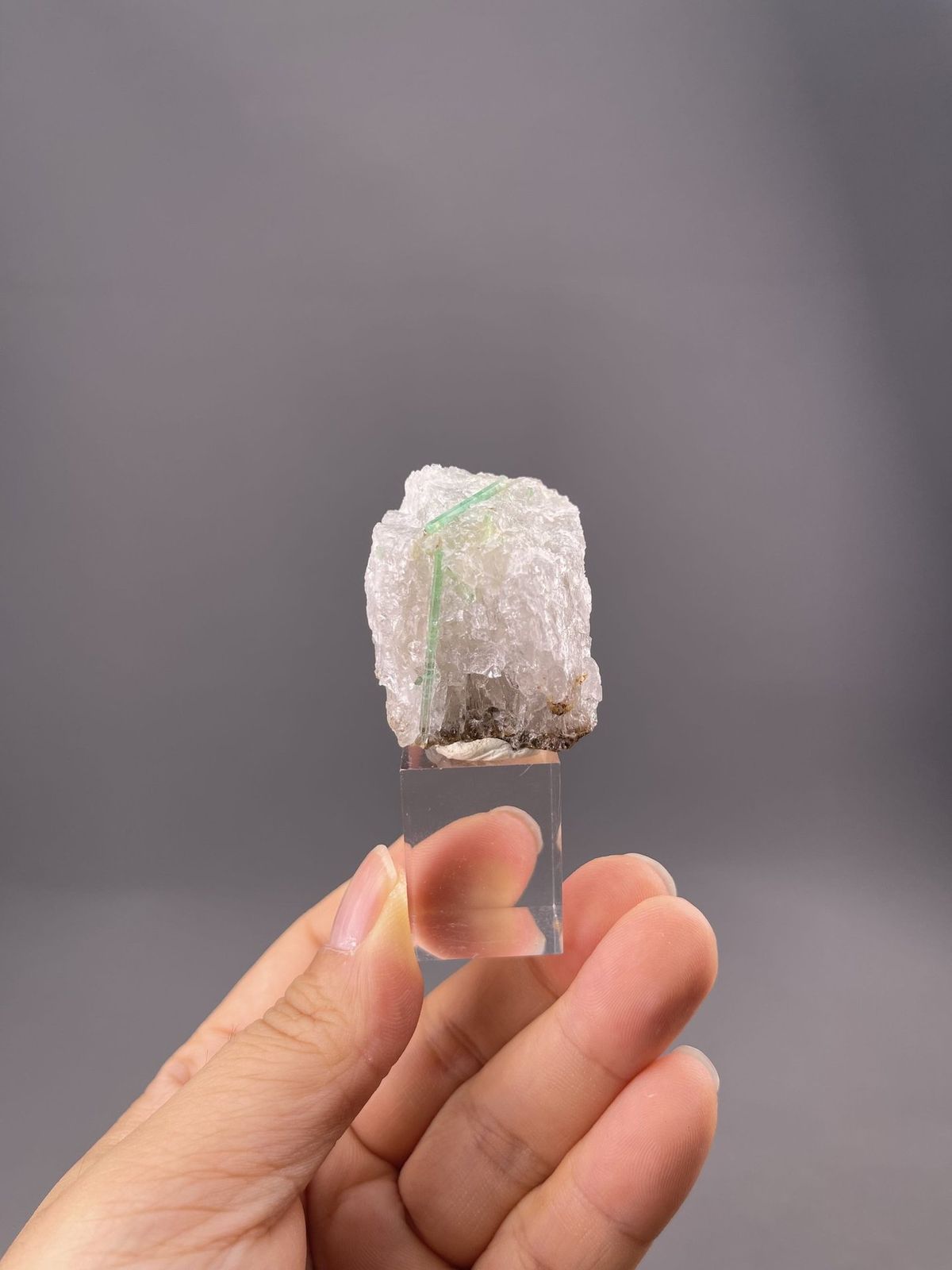
About Emeraldextended article
Emerald is the green gem variety of beryl, the most valued of the beryl family. Its colour is produced by traces of chromium and, in some deposits, vanadium. The finest emeralds show a pure, slightly bluish green of high saturation; almost all natural emeralds contain inclusions and fissures, and the trade fingerprints stones by their internal 'jardin' (garden).
Properties
Beryl is hexagonal, hard (7.5–8) and forms prismatic crystals. Emerald is brittle and frequently fractured, so most stones are routinely treated with oils or resins to improve apparent clarity — a practice that should be disclosed.
Occurrence
Classic sources are the Muzo and Chivor mines of Colombia, prized for their warm green; Zambia produces cooler, bluish stones, and Brazil, Afghanistan and Zimbabwe are also important. Other beryl varieties include aquamarine and morganite.
About Emerald
Emerald is classified as a mineral. Its crystal form varies within the species and holds a steady position among mineral species.
Collector context
Collector notes
For collectors, Emerald is a benchmark crystalline species. Emerald has known Chinese occurrences in Hunan, Yunnan.
Frequently asked questions
What is Emerald?
Emerald has the chemical formula Be3Al2Si6O18, crystallises in the Hexagonal system, has a Mohs hardness of 7.5–8. Emerald is a mineral recognized among collectors for its crystal form and distribution, with known Chinese sources.
What is the chemical formula of Emerald?
The chemical formula of Emerald is Be3Al2Si6O18.
What crystal system does Emerald belong to?
Emerald crystallises in the Hexagonal crystal system.
Where is Emerald found?
Notable localities for Emerald include Muzo, Chivor.