
Mica
Curated by Maggie Liu · Updated:
Mica is a group of sheet-silicate (phyllosilicate) minerals defined by a perfect basal cleavage that lets them split into thin, flexible, elastic sheets. The common species are muscovite (pale, potassium-rich) and biotite (dark, iron- and magnesium-rich). Micas are widespread in granites, schists and pegmatites, where they can grow as large, well-formed 'books'.
About Micaextended article
Mica — the minerals that peel
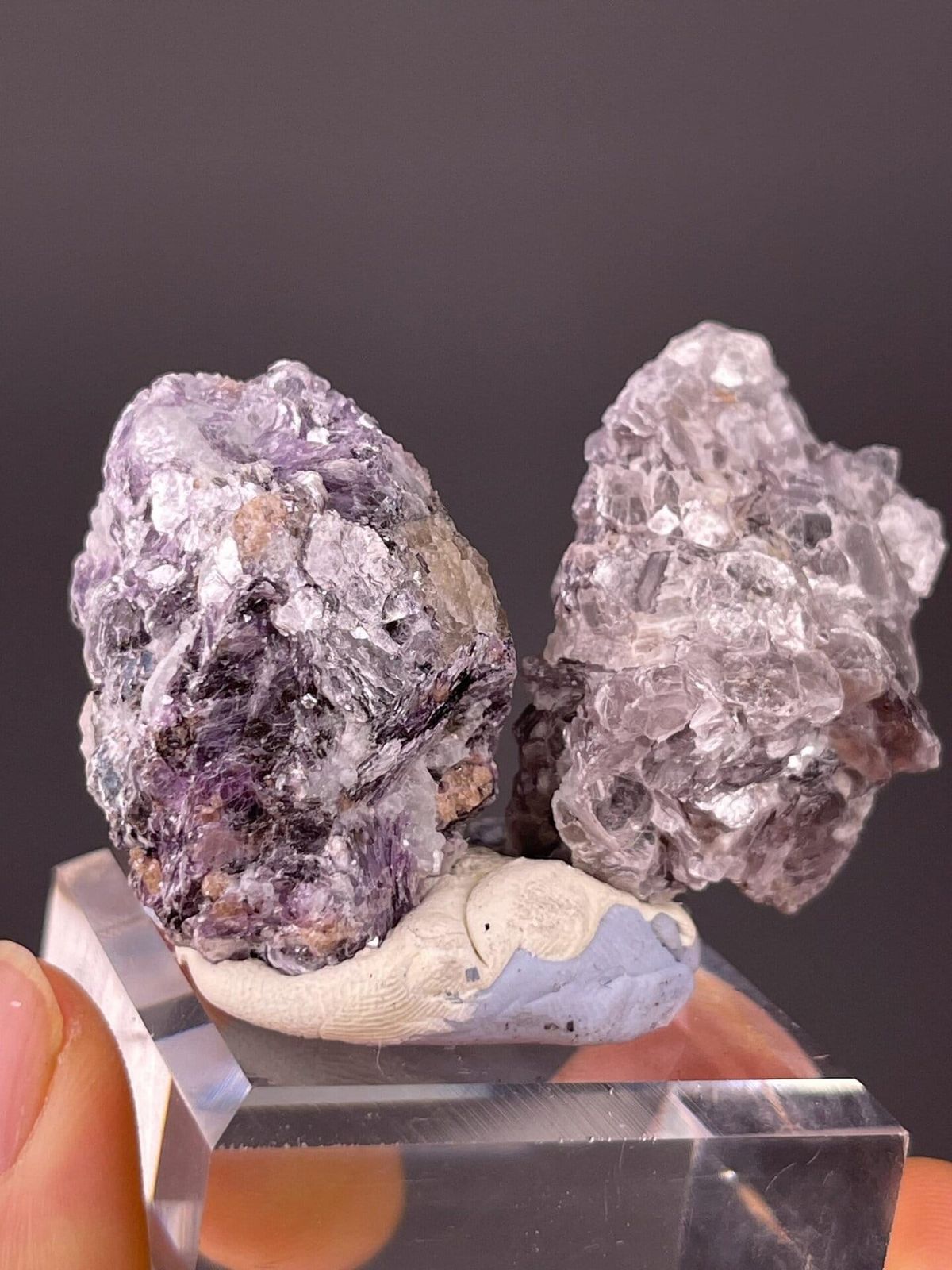
Mica is a family name, not a single species: silvery muscovite, dark biotite and phlogopite, and lilac lithium-bearing lepidolite are the members collectors meet most. All share one defining property — perfect basal cleavage that lets crystals split into paper-thin elastic sheets, stacking naturally into the hexagonal "books" the group is known for.
Our material
We stock muscovite from Sichuan Province, China — crystal book pairs from the same pegmatite-and-skarn country that produces the province's scheelite and aquamarine combinations.
Collector notes
Mica books are forgiving to handle but easy to delaminate — pick pieces up by the matrix, never by the sheet edges. Sharp hexagonal outlines and bright, uncorroded faces set the grade.
Related
See the Sichuan locality page for the wider system our material comes from.
Frequently asked questions
What is Mica?
Mica has a Mohs hardness of 2–3. Mica is a group of sheet-silicate (phyllosilicate) minerals defined by a perfect basal cleavage that lets them split into thin, flexible, elastic sheets. The common species are muscovite (pale, potassium-rich) and biotite (dark, iron- and magnesium-rich). Micas are widespread in granites, schists and pegmatites, where they can grow as large, well-formed 'books'.
Where is Mica found?
Notable localities for Mica include Sichuan Province.
Is Mica rare?
As a collector mineral, Mica is generally considered common.