
Choose a focus before you buy
A collection becomes more useful when it has a thread. You might collect one mineral in different colors and habits, specimens from one country or mine, examples of several crystal systems, fluorescent species, or simply a few pieces that teach you how quality varies. Your focus can change later; its first job is to stop every attractive object from becoming an unrelated impulse purchase.
Choose a set or a single specimen
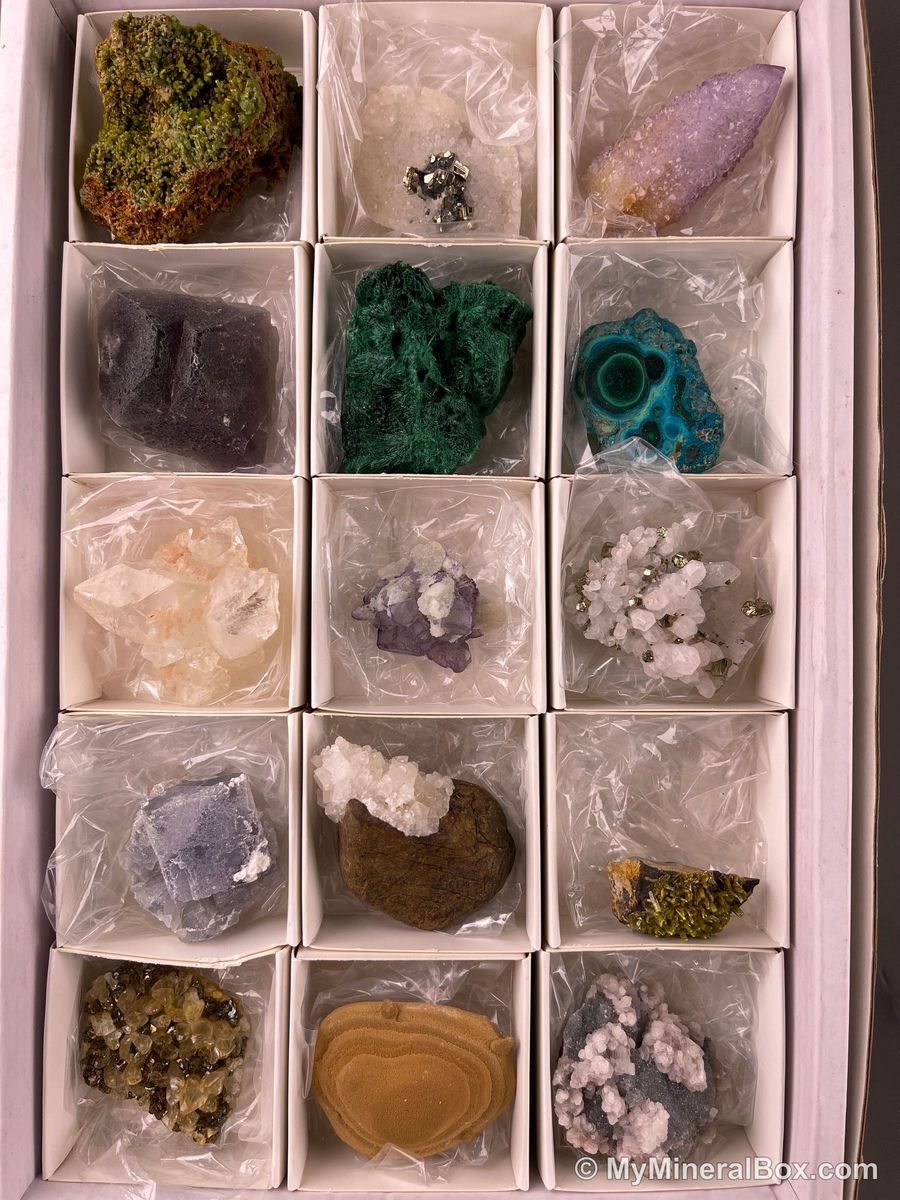
A documented mineral set lets you compare color, luster, hardness, and crystal form across several species, so it works well for study or a first display. One carefully chosen cabinet specimen teaches a different lesson: how condition, composition, and locality affect quality. Avoid unseen mystery boxes. Whichever route you choose, the listing should show the actual pieces and identify them conservatively.
Set a budget and learn the size classes
Mineral specimens are commonly described as thumbnails, miniatures, cabinet pieces, and larger display specimens. Cabinet size is roughly 6–15 cm, while thumbnails and miniatures cost less and are easier to store. Decide your total budget before shopping, then reserve part of it for boxes, stands, labels, and a hand lens. A smaller complete crystal is usually more instructive than a larger damaged one.
Evaluate quality and provenance
Look for complete terminations, undamaged edges, natural-looking attachment to matrix, and photographs that show every side. Ask whether a piece has been repaired, glued, dyed, stabilized, or otherwise treated. Provenance means more than a country name: retain the mine or district, region, prior label, seller, and purchase date whenever those facts are available. A vague locality should never be upgraded from appearance alone.
Start with durable, readable minerals
Quartz, calcite, fluorite, garnet, and pyrite show distinct habits and properties and are widely available at several sizes. They let a beginner compare cleavage, hardness, luster, and crystal form without beginning with rare material. Learn the care limits, though: fluorite and calcite cleave, pyrite needs dry storage, and strongly colored fluorite should not sit in prolonged direct sun. Leave very fragile stibnite and light-sensitive realgar or vivianite until your handling habits are established.
Where to buy with confidence
Mineral shows let you compare specimens in hand, clubs connect you with experienced collectors, and established online dealers make uncommon localities easier to find. Online, require photographs of the exact specimen or exact set, stated dimensions, a clear condition description, shipping protection, and a return policy. For Chinese material, a specific mine or district such as Yaogangxian, Daye, or Xuebaoding is more useful than a country-only label when that evidence exists.
Label, catalogue, and store from day one
Give every specimen a small identifier and keep a matching record with the mineral name, locality exactly as supplied, dimensions, seller, purchase date, price, and any treatment or repair disclosure. Keep the original label with the specimen even if you make a cleaner display label. Store pieces so harder minerals cannot scratch softer neighbors, keep reactive or light-sensitive species under the right conditions, and photograph the collection as it grows.
Frequently asked questions
How do I start a mineral collection?
Choose a simple focus, begin with a few clearly identified specimens, and record each mineral's locality, size, seller, and purchase date. Compare condition and crystal form before size, keep original labels, and learn the care needs of every species. A small coherent collection teaches more than a large box of undocumented stones.
Should a beginner buy a mineral set or one specimen?
A documented set is useful for comparing several species and properties at once; one stronger specimen is better for learning how condition, aesthetics, and provenance affect quality. Both can work. Avoid unseen mystery boxes, and require photos of the actual pieces, conservative identifications, dimensions, and clear treatment or repair disclosures.
How much should I spend on a first mineral collection?
Set a total budget that also leaves room for storage boxes, labels, a hand lens, and safe shipping. Start with a few complete, documented specimens rather than chasing size or rarity. Affordable thumbnails and miniatures let you learn several species, while one cabinet piece can anchor a focused display without requiring a large collection.
Which minerals are suitable for a beginner collection?
Quartz, calcite, fluorite, garnet, and pyrite are widely available and show useful differences in hardness, cleavage, luster, color, and crystal form. Learn each mineral's care limits: protect fluorite and calcite from knocks, keep pyrite dry, and delay very fragile or light-sensitive species until your handling and storage habits are established.