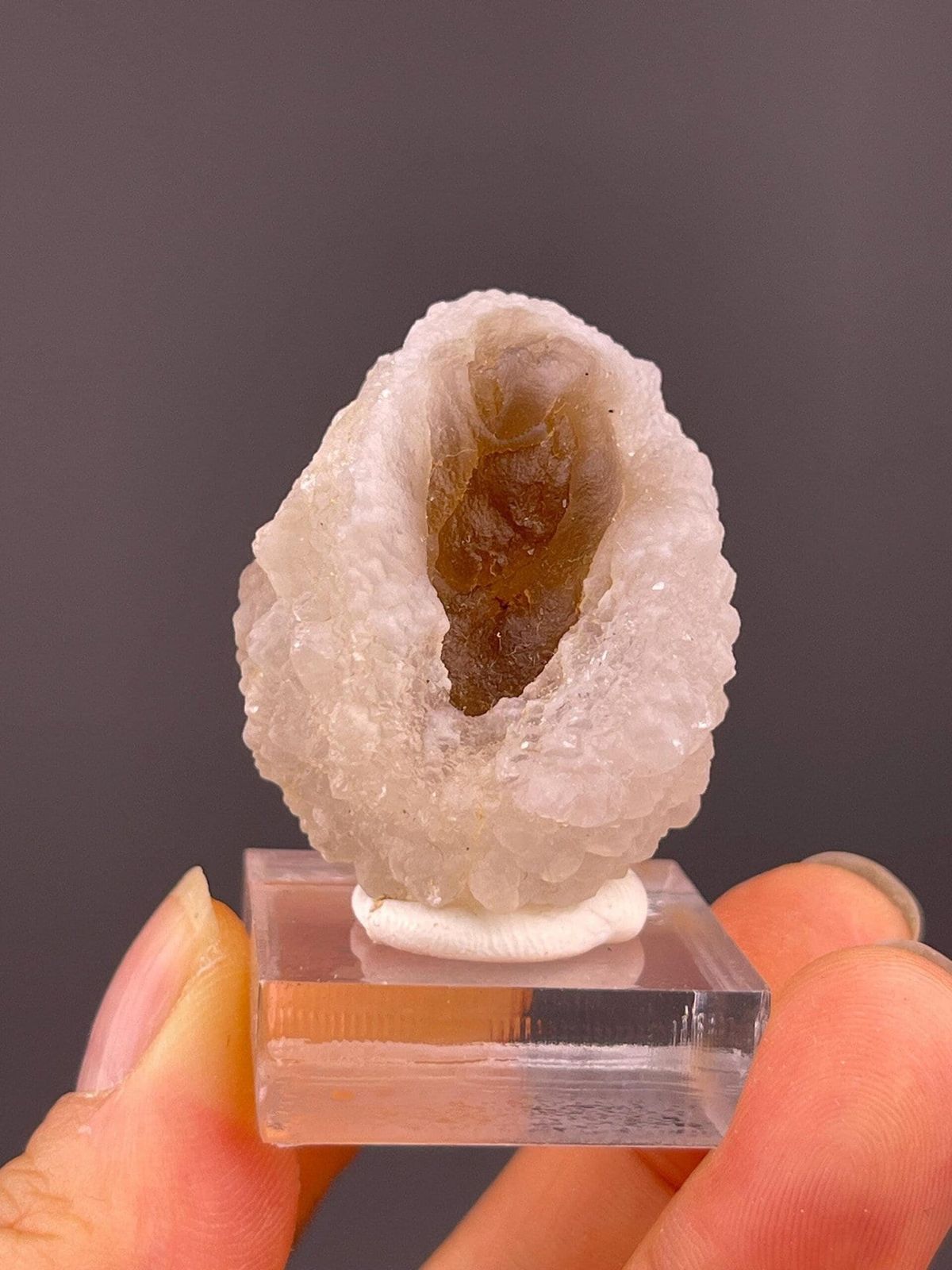
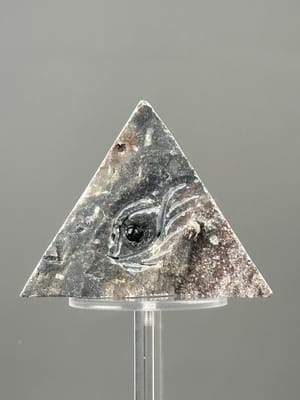
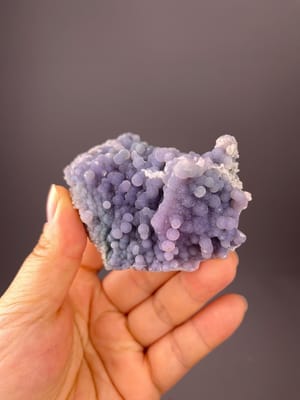
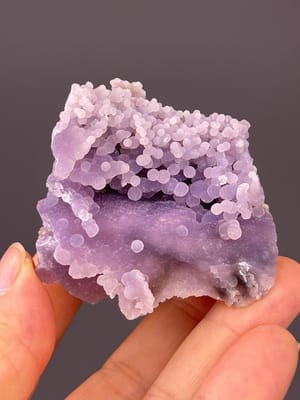
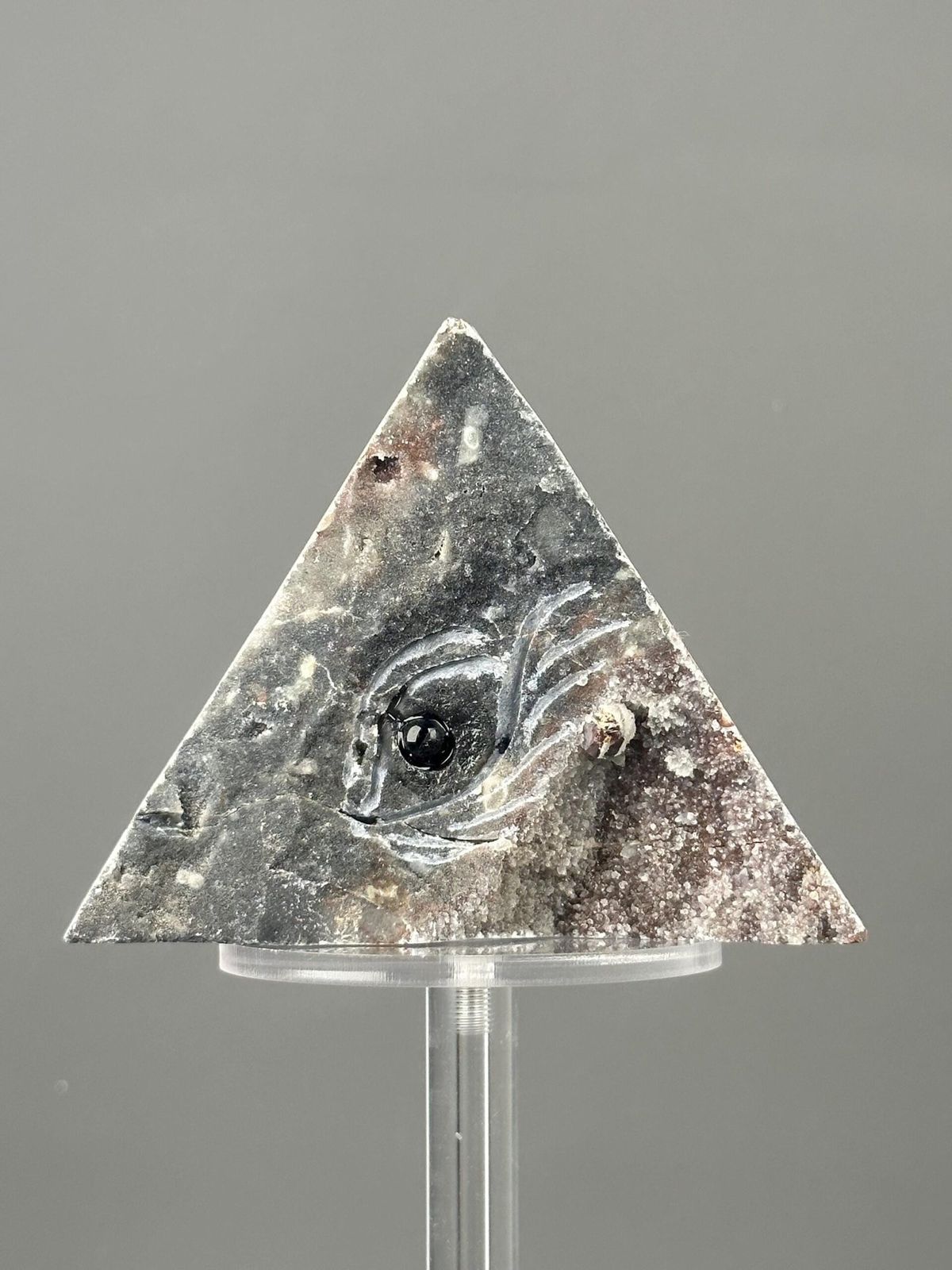
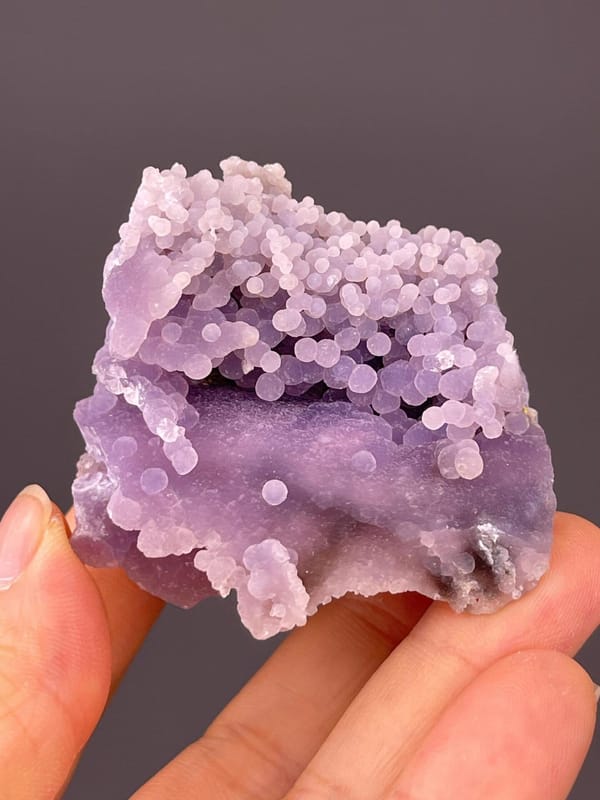
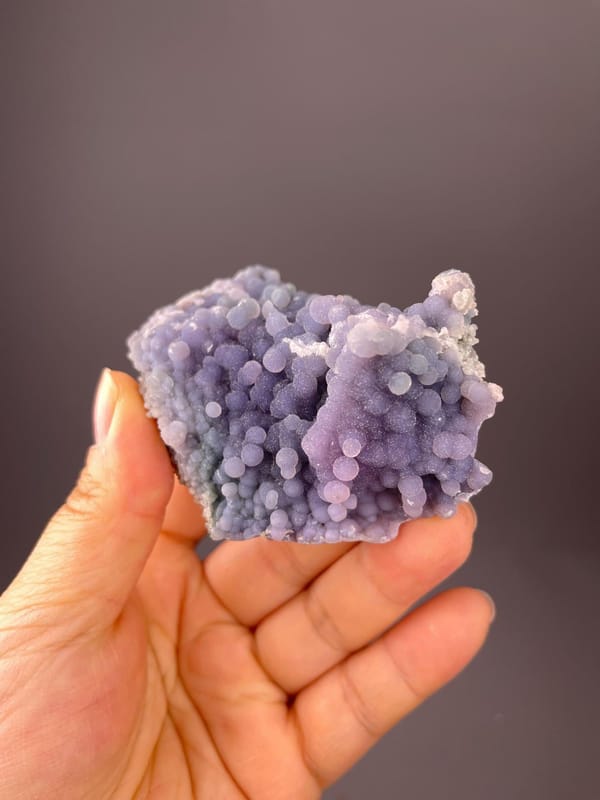
Agate is a banded variety of microcrystalline quartz (chalcedony) recognized for its concentric or parallel color zoning. Specimens come from volcanic and sedimentary host rocks worldwide, with notable Chinese, Brazilian, and Mexican sources favored by collectors.
Agate sits at 6.5-7 on the Mohs scale —
harder than glass; scratches steel.
Colors:
Streak White
Crystal system Trigonal (sub-microcrystalline)
SilicatesSilicates – Tectosilicates
TL;DR · 1 min read
Agate is a banded variety of chalcedony – itself a cryptocrystalline (microscopic-crystal) form of quartz. Chemically it is the same SiO2 as macrocrystalline quartz, but the crystals are too small to see without a microscope, giving the rock a smooth waxy texture.
Agate is a banded variety of chalcedony – itself a cryptocrystalline (microscopic-crystal) form of quartz. Chemically it is the same SiO2 as macrocrystalline quartz, but the crystals are too small to see without a microscope, giving the rock a smooth waxy texture. Banding patterns – parallel, concentric, fortification, eye-shaped, moss inclusions – are agate's signature. It is not technically a distinct mineral species but a textural variety; it is included in the encyclopedia because collectors treat it as an independent category and it appears on hundreds of shop products.
Notable Varieties
Banded (classic – parallel/concentric layers)
Moss agate (chlorite or manganese inclusions form moss-like patterns)
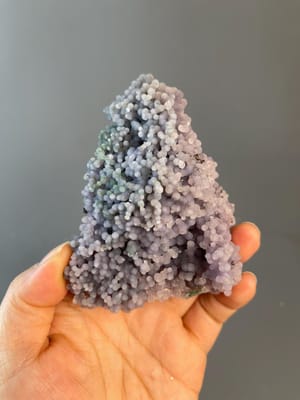
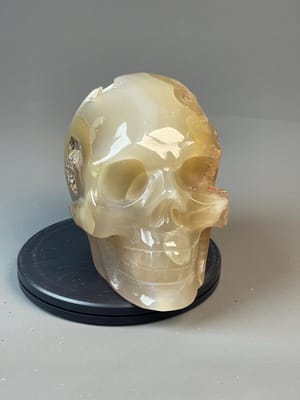
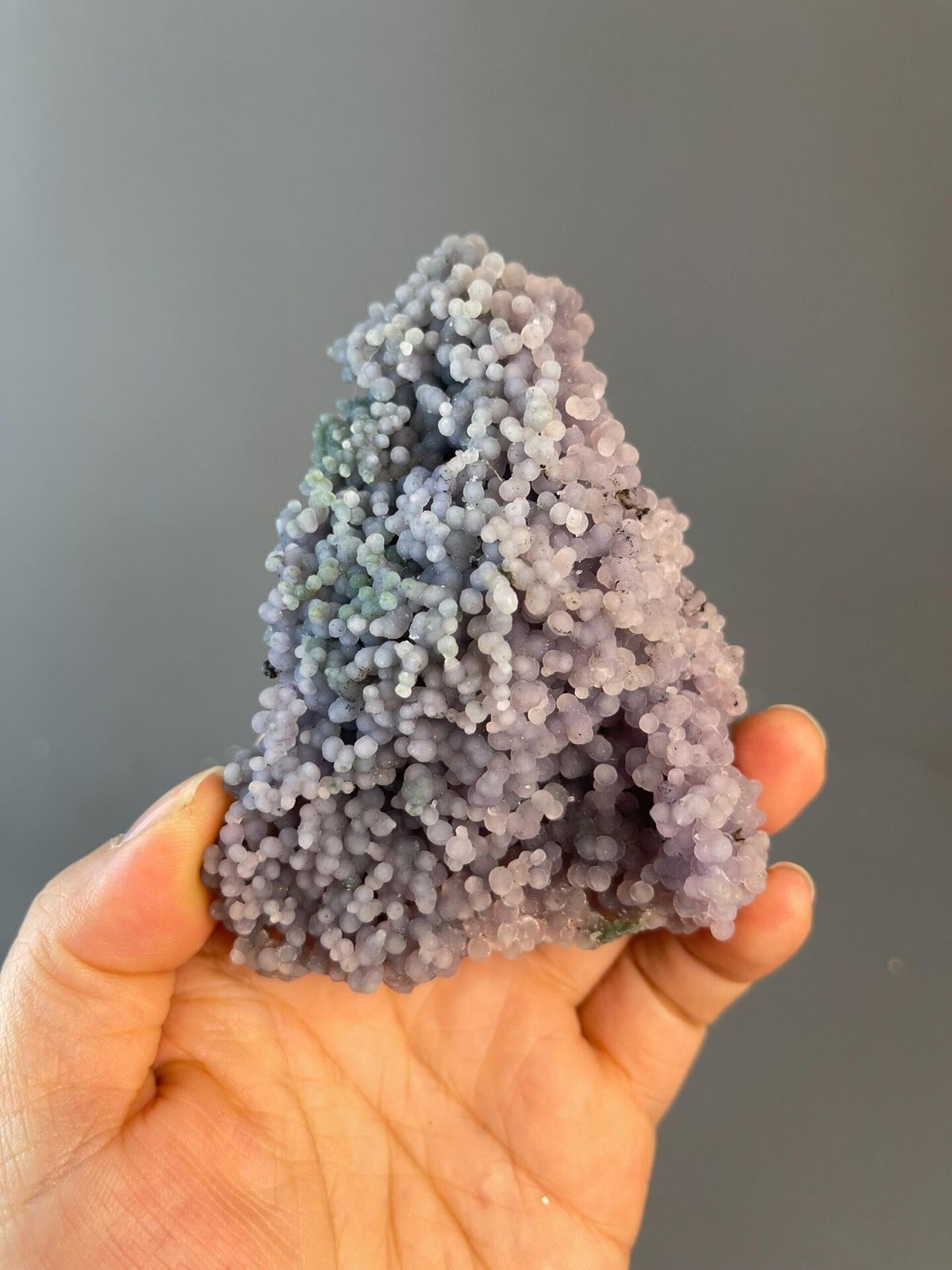
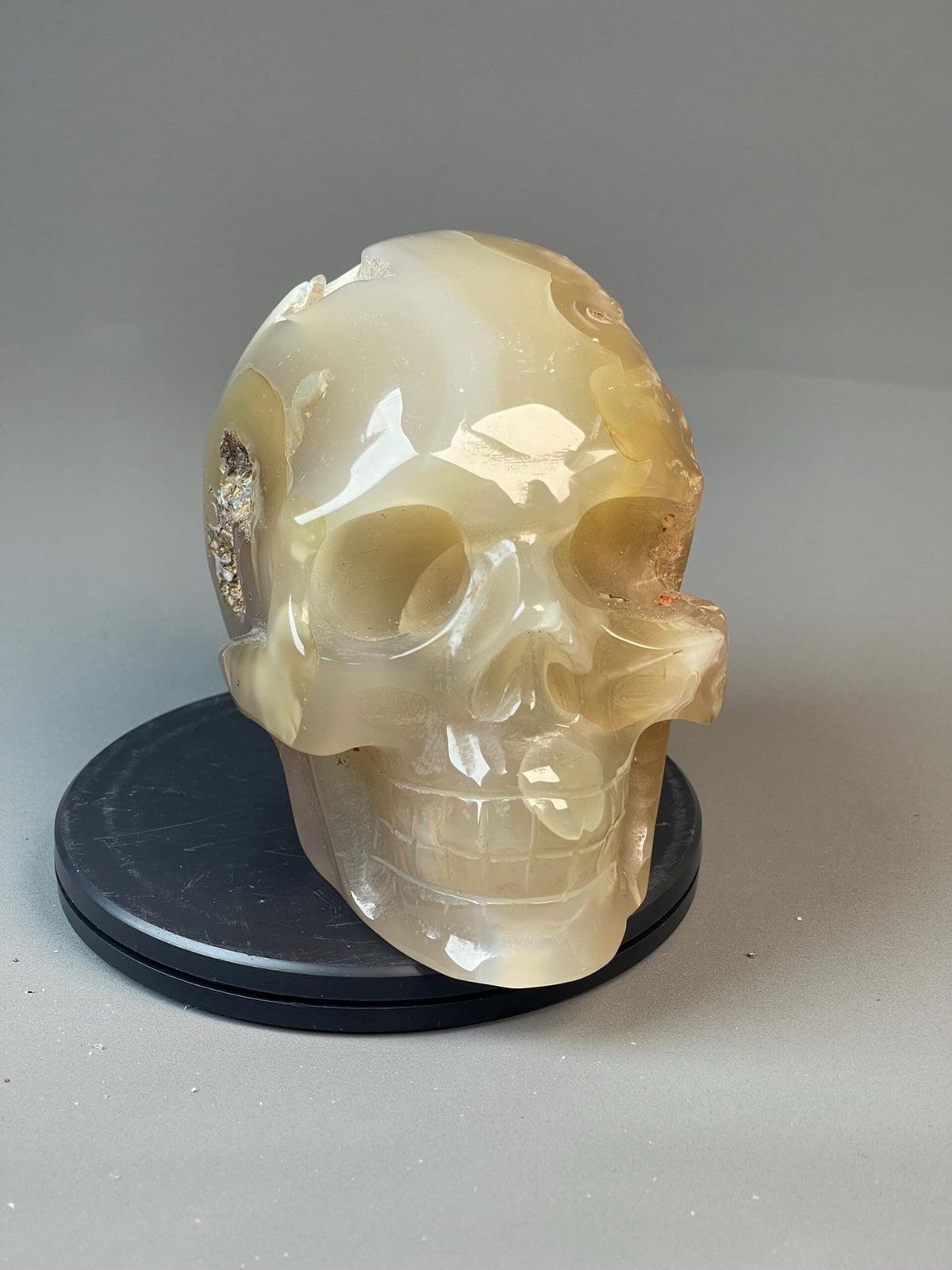
Liaoning and Inner Mongolia produce significant Chinese agate, typically as banded nodules and fortification varieties. Aershan in Inner Mongolia is a notable Chinese locality. However, most international agate trade still flows from Brazil, Indonesia (grape agate), Lake Superior, and Madagascar. Chinese agate carving has a long tradition (jade-style techniques applied to agate) and produces signature ornamental pieces.
Cite this entry
APA
MyMineralBox Editorial Team. (2026). Agate. My Mineral Box. Retrieved May 23, 2026, from https://mymineralbox.com/mineral-encyclopedia/minerals/agate/
MLA
MyMineralBox Editorial Team. "Agate." My Mineral Box, 2026, https://mymineralbox.com/mineral-encyclopedia/minerals/agate/. Accessed May 23, 2026.
Chicago
MyMineralBox Editorial Team. "Agate." My Mineral Box. Last modified May 4, 2026. https://mymineralbox.com/mineral-encyclopedia/minerals/agate/.
BibTeX
@misc{mmb_agate,
 author = {{MyMineralBox Editorial Team}},
 title = {{Agate}},
 year = {2026},
 publisher = {My Mineral Box},
 url = {https://mymineralbox.com/mineral-encyclopedia/minerals/agate/},
 urldate = {2026-05-23}
}
About Agate
Agate is a cryptocrystalline form of silica (SiO2) belonging to the quartz family. It develops as nodules or seams in volcanic cavities and weathered sedimentary rocks, where layered silica deposition over geologic time produces its characteristic concentric banding. The bands range from translucent to opaque and span a full palette including white, gray, blue, red, brown, and green.
Identification & care
Agate has a Mohs hardness of 6.5 to 7 and a specific gravity around 2.6. Luster is waxy to vitreous on broken surfaces and silky to glassy on polished faces. Fracture is conchoidal, the streak is white, and bands often fluoresce weakly under UV. The combination of fine concentric banding, hardness, and waxy luster reliably distinguishes agate from jasper (which is opaque) and from chalcedony (which lacks distinct bands).
Collector context
Collector notes
Agate is one of the most accessible cabinet-grade species, with abundant supply keeping prices reasonable for hand-sized pieces. Premium specimens show sharp, fine banding, intact geode walls, and unusual color combinations such as deep blue, fire orange, or natural fortification patterns. Polished slices are common; collectors who prefer specimens in their natural state look for thunder eggs and uncut nodules from classic localities including Hubei, Jiangxi, Minas Gerais, and Chihuahua.
Naming history
Agate is named after a river. Theophrastus described the stone around 300 BC from the Achates in Sicily — today's Dirillo — and the river's name became the mineral's. It is one of the oldest surviving mineral names in any language.
Frequently asked questions
What is Agate?
Agate has the chemical formula SiO2, crystallises in the Trigonal system, has a Mohs hardness of 6.5–7. Agate is a banded variety of microcrystalline quartz (chalcedony) recognized for its concentric or parallel color zoning. Specimens come from volcanic and sedimentary host rocks worldwide, with notable Chinese, Brazilian, and Mexican sources favored by collectors.
What is the chemical formula of Agate?
The chemical formula of Agate is SiO2.
What crystal system does Agate belong to?
Agate crystallises in the Trigonal crystal system.
Where is Agate found?
Notable localities for Agate include Hunan Province, China.
Is Agate rare?
As a collector mineral, Agate is generally considered common.
We use a small set of cookies (analytics, checkout, chat) to keep the site working and understand how visitors use it. Checkout-essential cookies are always loaded. Privacy policy