
Goshenite
Curated by Maggie Liu · Updated:
Goshenite is a cyclosilicate mineral valued for its hardness and gem potential, with known Chinese sources.
About Gosheniteextended article
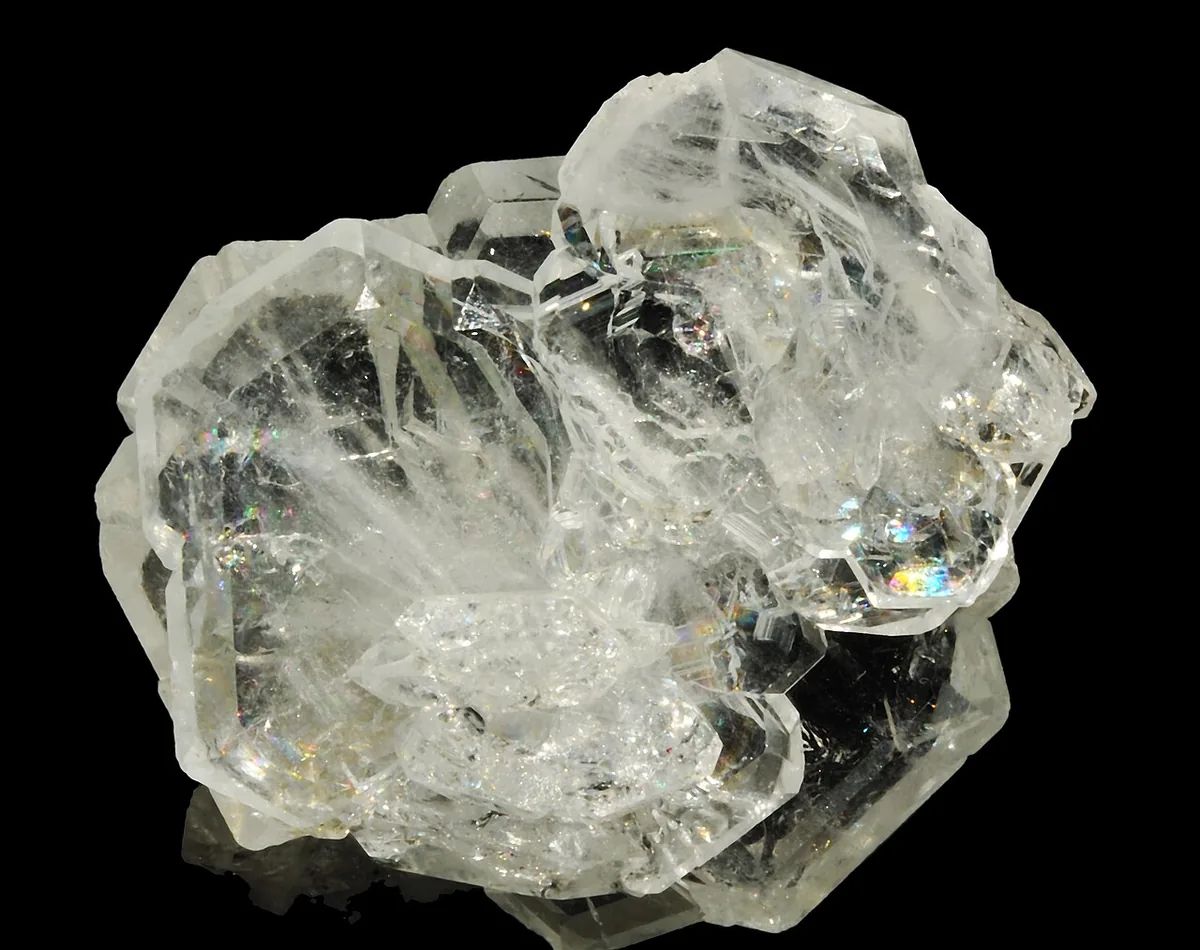
Goshenite is the colourless variety of beryl — beryl with none of the trace elements that colour its better-known relatives. It is named after Goshen, Massachusetts, where it was first described. Being pure beryl, it is sometimes used as a stand-in to demonstrate the species' clarity and brilliance.
Properties
Goshenite is hexagonal, hard (7.5–8) and forms clean prismatic crystals. Because it lacks the chromium, iron or manganese that produce green, blue and pink beryls, it is water-clear; historically it was even used for spectacle and instrument lenses.
Occurrence
It forms in granitic pegmatites worldwide, including Brazil, Pakistan, Russia and the United States. Coloured members of the family include emerald, aquamarine, morganite and heliodor.
About Goshenite
Goshenite is a cyclosilicate mineral in the beryl group and has the chemical formula Be3Al2Si6O18. It crystallizes in the hexagonal system and ranks among the harder species, with lasting durability.
Identification & care
Crystals commonly develop as prismatic hexagonal, often large and well-formed. Its color is typically colorless and white. The luster is vitreous, the streak is white, and specimens range from transparent to translucent. The cleavage is imperfect basal. The fracture is conchoidal, which aids identification.
Collector context
Collector notes
Goshenite stands out for its gem potential and crystalline aesthetics. Goshenite has known Chinese occurrences in Sichuan.
Frequently asked questions
What is Goshenite?
Goshenite has the chemical formula Be3Al2Si6O18, crystallises in the Hexagonal system, has a Mohs hardness of 7.5–8. Goshenite is a cyclosilicate mineral valued for its hardness and gem potential, with known Chinese sources.
What is the chemical formula of Goshenite?
The chemical formula of Goshenite is Be3Al2Si6O18.
What crystal system does Goshenite belong to?
Goshenite crystallises in the Hexagonal crystal system.
Related minerals
Looking for a Goshenite specimen?
Our inventory is one-of-a-kind and turns over quickly. Tell us what you're after — species, size, budget — and we'll notify you when a matching Goshenite arrives from our sourcing network.
Request this mineral