
Idocrase
Curated by Maggie Liu · Updated:
About Idocraseextended article
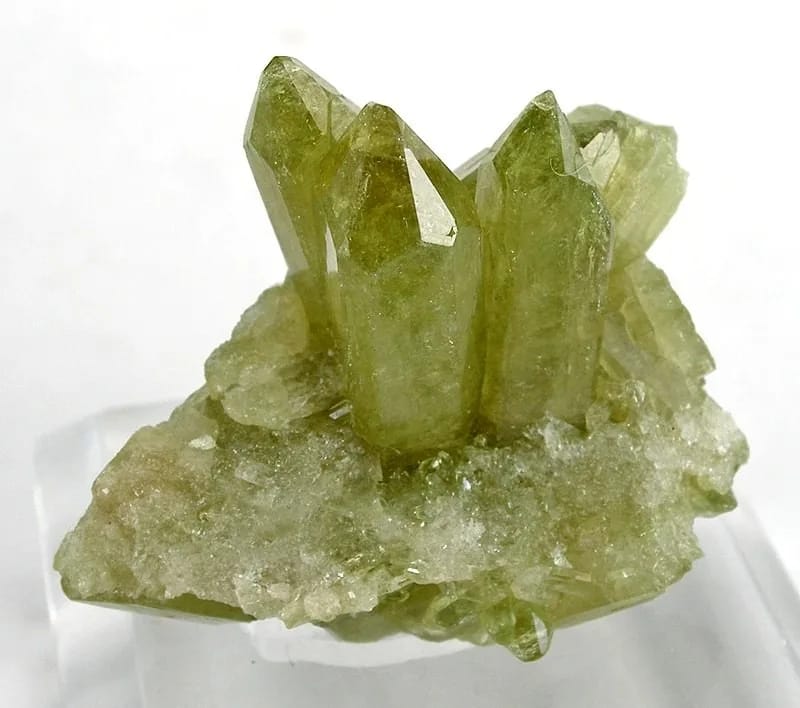
Idocrase is an alternative name for vesuvianite, a calcium-magnesium-aluminium sorosilicate first described from the volcanic blocks of Mount Vesuvius, Italy — the origin of both of its names. It typically occurs in green, yellow-green and brown, and a compact green massive form is sometimes cut as a jade substitute (the 'californite' of California).
Properties
Vesuvianite is tetragonal and commonly forms stout prismatic crystals with a vitreous lustre and a hardness of 6–7. Transparent material is occasionally faceted, while the massive material is carved.
Occurrence
It forms mainly in contact-metamorphosed and skarn limestones, often with grossular garnet, diopside and wollastonite. Classic localities include Vesuvius and the Italian Alps, the Jeffrey Mine in Quebec, and skarns in Russia and the United States. It is the same species as vesuvianite.
Related minerals
Looking for a Idocrase specimen?
Our inventory is one-of-a-kind and turns over quickly. Tell us what you're after — species, size, budget — and we'll notify you when a matching Idocrase arrives from our sourcing network.
Request this mineral