Opal

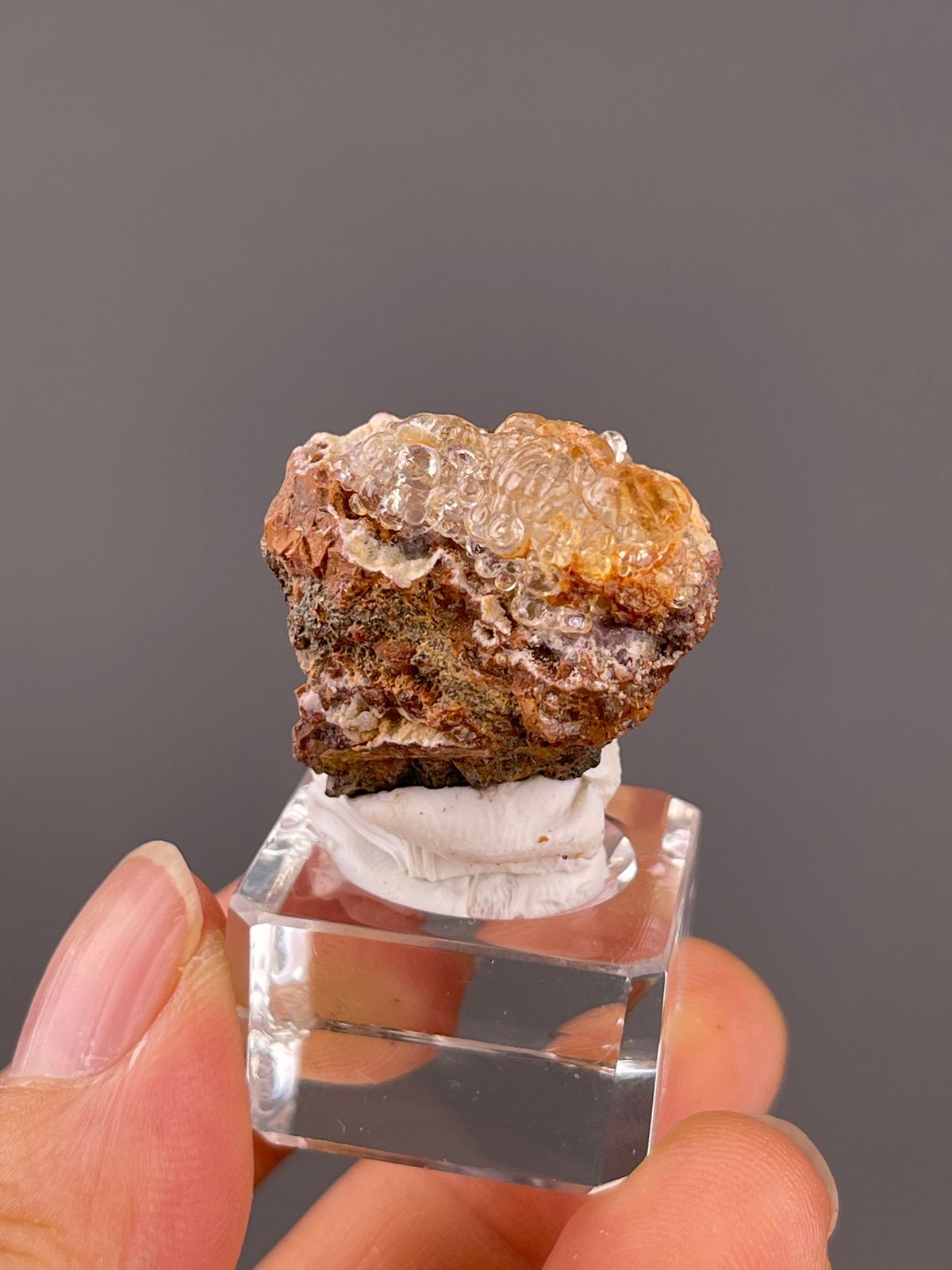
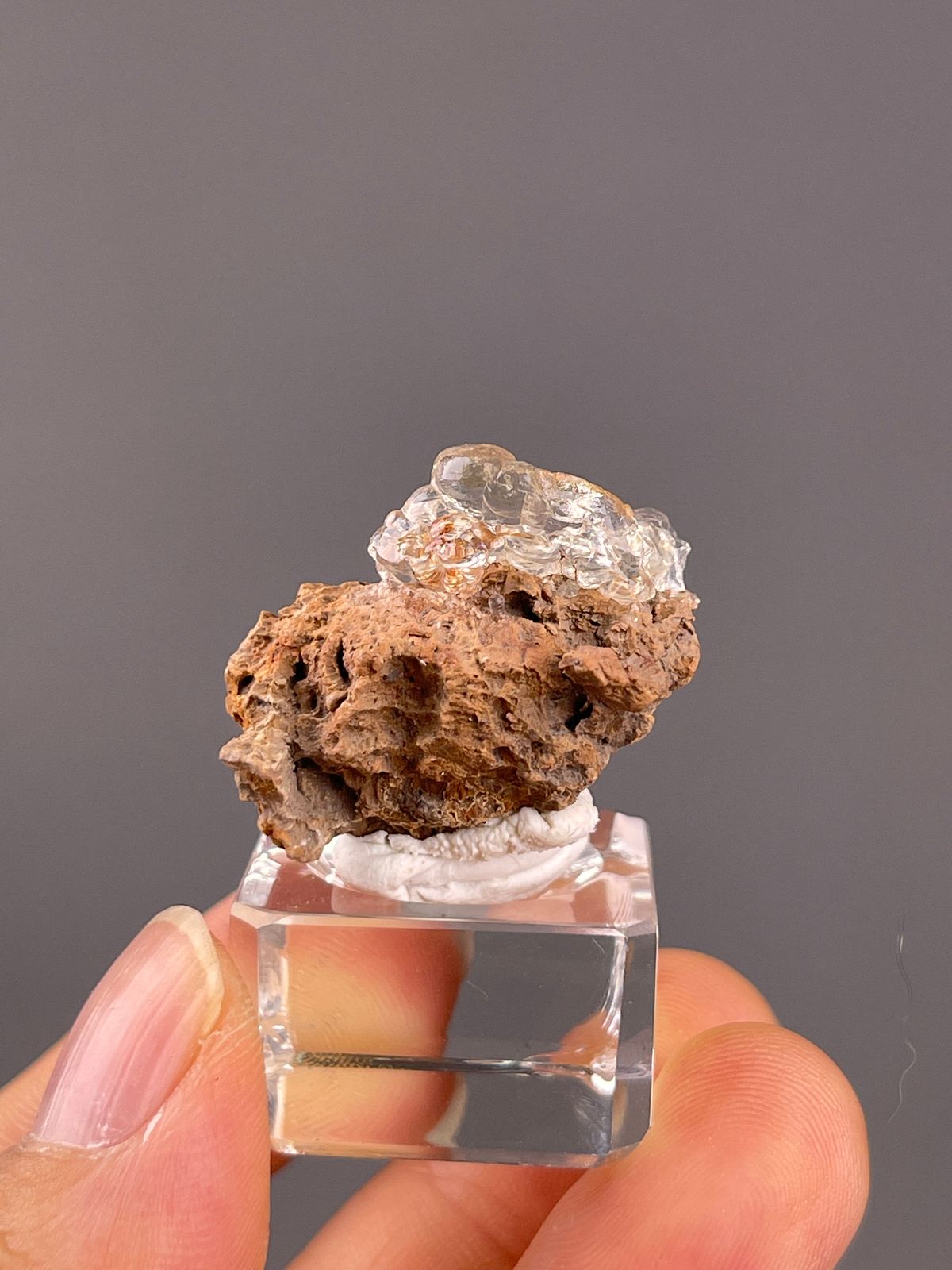
Opal is a mineraloid / tectosilicate mineral prized by collectors for its exceptional color range, with known Chinese sources.

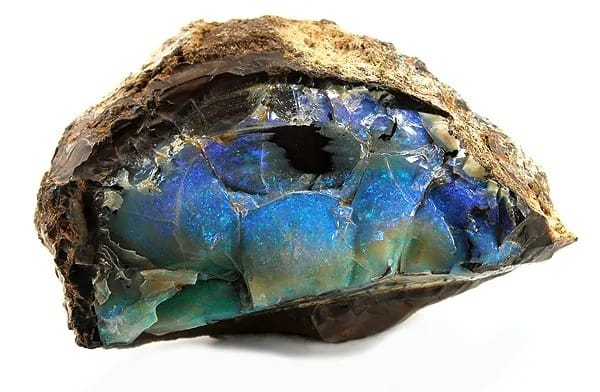
Opal specimen
Photo: Robert M. Lavinsky · CC BY-SA 3.0 via Wikimedia Commons

About Opalextended article

China-iconic

China is a defining locality for Opal · 蛋白石. See the Chinese collector page →

Care notesHydrated — never store dry in low-humidity. Some specimens stored in water to prevent crazing. Full cleaning guide →
Formation eraSedimentary silica precipitation; Australian Cretaceous-Cenozoic.
Market availability: Uncommon
Found at major shows and select dealers. Quality varies by locality.
Collector tier: Cabinet Classic
World-class display species — sought after for cabinet collections, well-documented localities, frequent show-piece pieces.
Geological setting
Volcanic
GroupQuartz Group (silica)
Related members: Quartz · Amethyst · Citrine · Rose Quartz · Chalcedony · Agate
Optical Effects
Play of color
Crystal system
Amorphous

Opal is a hydrated, non-crystalline (“amorphous”) silica that ranks among the most popular gem materials on Earth. Precious opal’s spectral play of color comes from light diffraction off ordered arrays of microscopic silica spheres — a phenomenon unique to opal.

Occurrence in China

The undisputed source for premium precious opal is Lightning Ridge, Coober Pedy, Mintabie (Australia), providing >90% of world supply. Welo (Ethiopia) emerged in the 2010s as the second major source. China hosts only minor common-opal and hyalite occurrences in Liaoning and Sichuan basalt environments — not in commercial gem grade.

Identification

Play-of-color (in precious opal) + amorphous habit + lower density and hardness than quartz. Common opal is identified by waxy luster and conchoidal fracture. Hydrophane opal absorbs water and changes appearance.

Collector Notes

Black opal from Lightning Ridge with vivid play-of-color tops the gem market. Boulder opal from Queensland and Welo crystal opal are major collector targets. Common opal varieties — pink Andean, green Peruvian — are accessible and beautiful.

Export:BibTeXRIS
External research links for Opal
Name in other languages
deOpal
frOpale
esÓpalo
itOpale
jaオパール
Gemological optical data
Refractive index
1.37–1.47
Birefringence
none (amorphous)
Dispersion
Published: May 6, 2026 · Last reviewed: May 6, 2026
Editorial standards & sources →

About Opal

Opal is classified as a mineraloid / tectosilicate mineral in the silica group and has the chemical formula SiO2·nH2O. It crystallizes in the amorphous system and is one of the most visually varied minerals in the collector market. Its combination of structural character and global distribution make it a recognized species in both systematic and aesthetic collections.

Identification & care

Opal typically forms amorphous; nodular, botryoidal, vein-filling, replacing fossils; no crystal form. Its color range is broad, including colorless, white, black, orange, red, yellow, green, blue, and play-of-color in precious opal. The luster is waxy, vitreous, resinous, the streak is white, and specimens range from transparent to opaque. The fracture is conchoidal, which is one of its key identifying features.

Collector context

How it forms

In terms of geology, Opal forms in low-temperature silica precipitation from groundwater; weathering profiles; volcanic hydrothermal; replacement of fossils and bones. It is commonly found in association with chalcedony, quartz, calcite, limonite.

Classic Chinese localities

Opal is widely represented across Chinese provinces, including Fujian, Gansu, Anhui, Guangdong.

Why collectors care

Collectors pursue Opal for its patterns, color depth, and polish response rather than for pattern character. Good material has a surface that polishes cleanly, a visual character that holds up in direct light, and enough size to anchor a display on its own. Chinese sources, where present, supply much of the material currently cut and sold as decorative pieces.

What affects value

Value in Opal is assessed, in typical order of weight, against: (1) source locality; (2) size; (3) pattern and visual character; (4) color depth and distribution; (5) polish response and surface finish; (6) piece integrity (absence of major cracks or chips). Uniqueness of pattern and verified source region add significantly to decorative pieces.

Naming history

The name Opal has a specific etymological and historical context — see Mindat's reference entry for provenance details. We have retained naming data at the record level; published prose is paraphrased from factual fields rather than copied from source.

Frequently asked questions

What is Opal?

Opal is a mineraloid / tectosilicate mineral prized by collectors for its exceptional color range, with known Chinese sources.

What is the chemical formula of Opal?

The chemical formula of Opal is SiO2H.

Where is Opal found?

Notable localities for Opal include Lightning Ridge, Coober Pedy.

Is Opal rare?

As a collector mineral, Opal is generally considered uncommon.

References & databases

Mindat.org is the world’s largest open mineralogy database. Our descriptions are written independently and fact-checked.